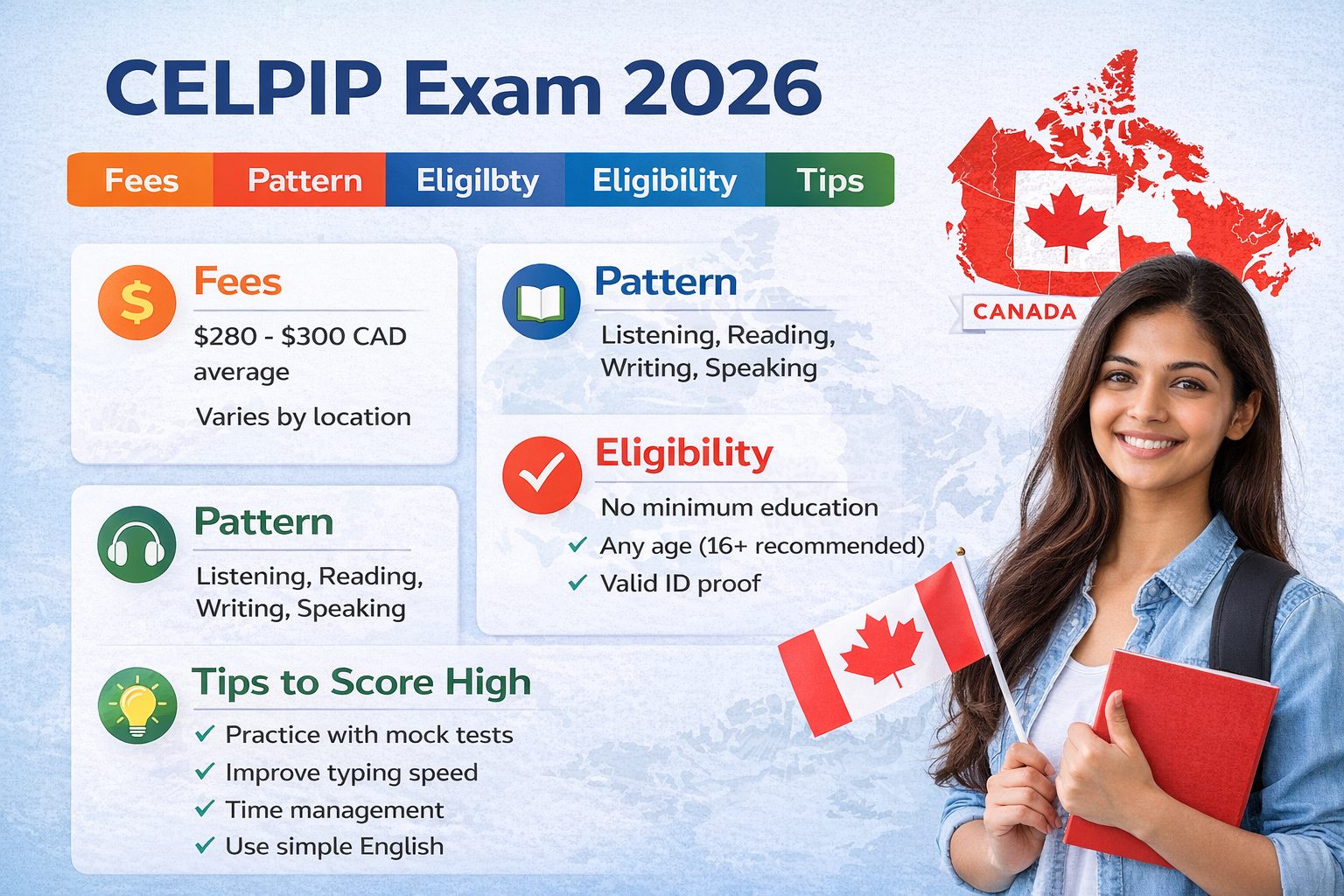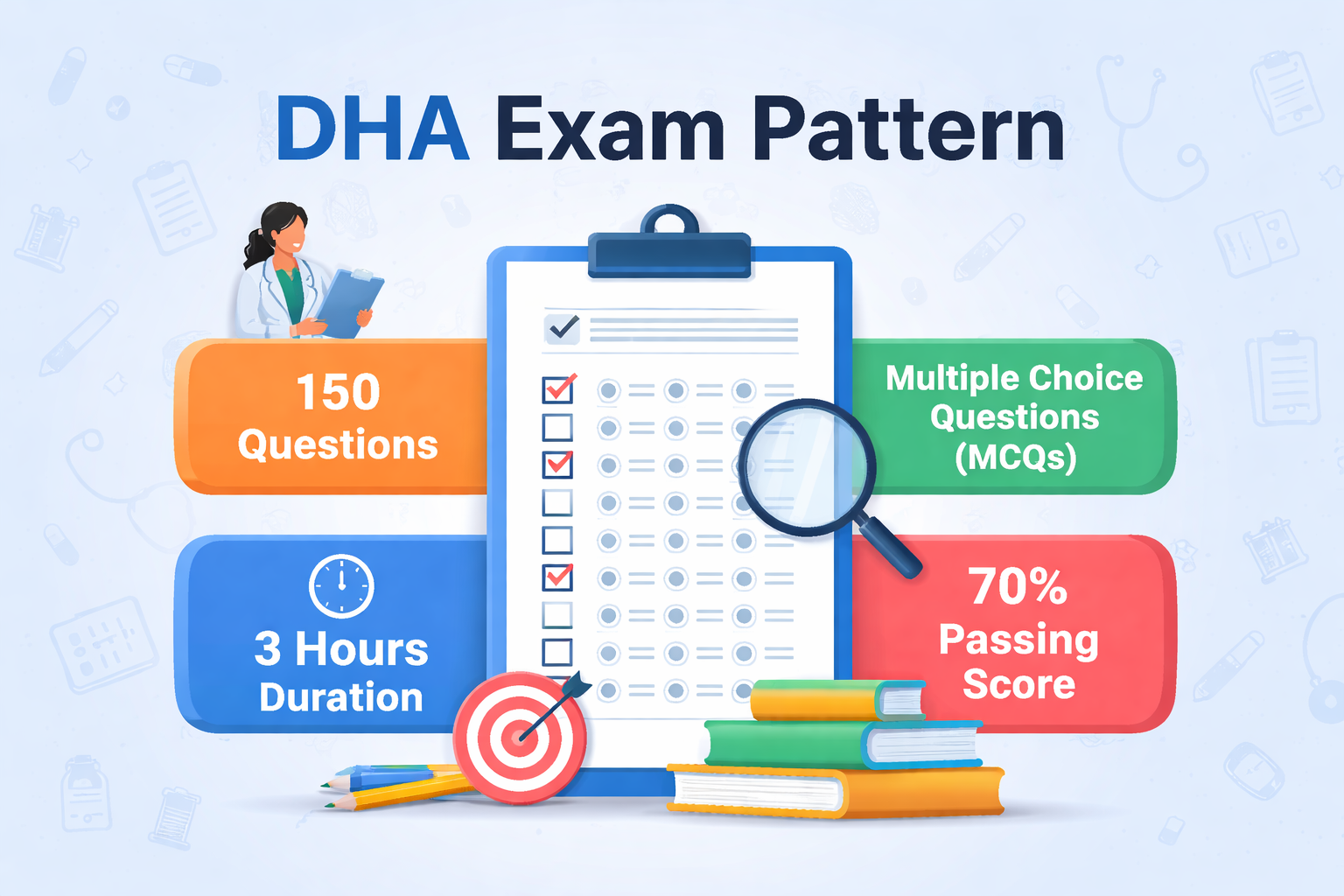
Celpip practice test 2026 free questions format listening reading writing speaking tips

CELPIP Practice Test 2026: Free Questions, Format & Tips to Score High

Preparing with a CELPIP practice test is one of the most effective ways to improve your exam performance. While studying grammar and vocabulary is important, real improvement happens when you apply your knowledge in a test-like environment. Therefore, practice tests play a crucial role in your preparation journey.

Since the CELPIP exam is fully computer-based, practicing in a similar environment helps you build familiarity and confidence. In addition, it allows you to understand how the exam interface works, which reduces stress on test day. As a result, candidates who regularly take practice tests often perform better.

The exam is conducted by Paragon Testing Enterprises and is accepted by Immigration, Refugees and Citizenship Canada (IRCC) for immigration and citizenship applications. Consequently, achieving a high score can significantly improve your chances of success.

In this guide, you will learn everything about the CELPIP practice test, including the format, sample questions, preparation strategies, and expert tips to score high. If you are new to the exam, start with our complete CELPIP exam guide to understand the format first.

🟦 CELPIP Practice Test 2026 Overview

A CELPIP practice test is designed to replicate the actual exam environment. Unlike casual study methods, it provides a structured way to test your skills under time pressure. Therefore, it is an essential part of any serious preparation plan.

Moreover, these tests follow the same format as the real exam. As a result, they help you understand the types of questions you will face. In addition, regular practice allows you to identify your strengths and weaknesses.

By taking practice tests consistently, you can:

  • Improve speed and accuracy
  • Build exam confidence
  • Develop better time management skills

Ultimately, practice tests bridge the gap between learning and performance.

🟦 CELPIP Practice Test Format

Understanding the exam format is essential before attempting any practice test. For this reason, you should become familiar with each section in detail. You can also use official practice materials available on the CELPIP website to simulate real exam conditions.

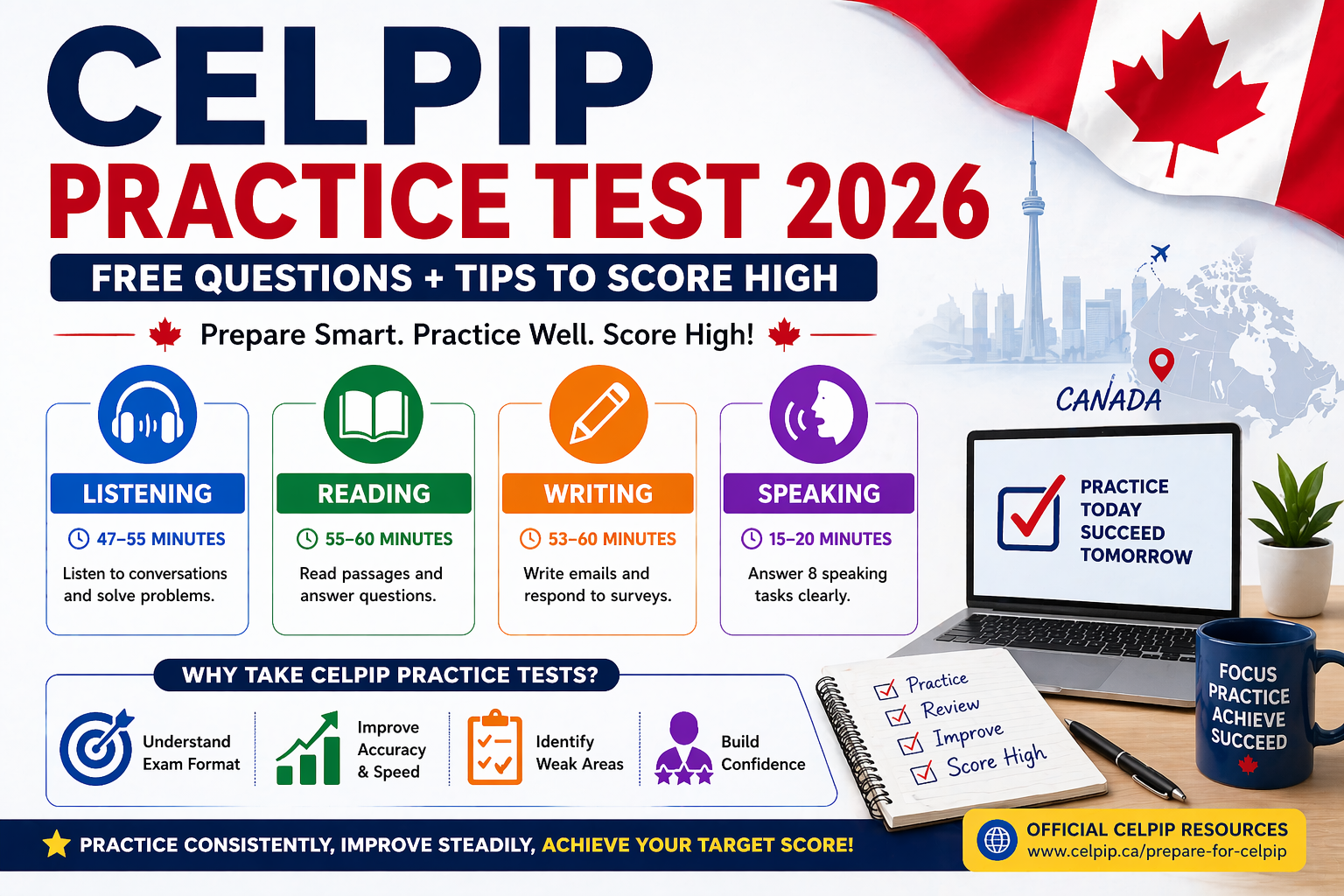
🟨 CELPIP Listening Practice Test

The listening section evaluates your ability to understand spoken English in different situations.

  • Duration: 47–55 minutes
  • Includes conversations, discussions, and problem-solving tasks

You will listen to audio recordings and answer questions based on them. Therefore, it is important to focus on context rather than individual words. In addition, practicing note-taking can improve your accuracy.

🟨 CELPIP Reading Practice Test

The reading section tests your ability to understand written English.

  • Duration: 55–60 minutes
  • Includes multiple passages and comprehension questions

You need to read quickly and identify key ideas. Consequently, developing scanning and skimming techniques can be very helpful. Moreover, practicing regularly improves both speed and comprehension.

🟨 CELPIP Writing Practice Test

The writing section evaluates your ability to communicate effectively in written English.

  • Duration: 53–60 minutes
  • Includes:
    • Email writing
    • Survey responses

Clear organization and correct grammar are essential for scoring well. In other words, your answers should be structured, concise, and easy to understand.

🟨 CELPIP Speaking Practice Test

The speaking section measures your ability to communicate verbally.

  • Duration: 15–20 minutes
  • Includes 8 speaking tasks

Your responses are recorded using a microphone. Therefore, clarity, pronunciation, and confidence are crucial. In addition, practicing regularly can help improve fluency.

🟦 Free CELPIP Practice Test Questions

Practicing with sample questions is a great way to understand the exam format. For example, consider the following tasks:

🟨 Listening Sample Question

You hear a conversation between two people discussing travel plans.
πŸ‘‰ Question: What is the main purpose of the conversation?

🟨 Reading Sample Question

Read a passage about a job advertisement.
πŸ‘‰ Question: What is the main requirement for the job?

🟨 Writing Sample Task

Write an email requesting leave from your manager.

🟨 Speaking Sample Task

Describe a memorable event from your life.

These examples provide a clear idea of what to expect. As a result, you can approach the exam with more confidence.

🟦 How to Use CELPIP Practice Tests Effectively

Simply taking practice tests is not enough. Instead, you need a structured strategy to get the most benefit. To get better results, follow a structured CELPIP study plan alongside your practice tests.

🟨 Simulate Real Exam Conditions

Practice in a quiet environment with a timer. This way, you become familiar with exam pressure and time constraints.

🟨 Review Your Answers

After completing a test, analyze your mistakes carefully. In fact, this step is essential for improvement because it helps you understand where you went wrong.

🟨 Track Your Progress

Maintain a record of your scores over time. As a result, you can monitor improvement and adjust your strategy.

🟨 Focus on Weak Areas

Spend extra time improving sections where you score low. Consequently, your overall performance becomes more balanced.

🟦 Benefits of CELPIP Practice Tests

Practice tests offer several important benefits.

🟨 Improves Time Management

You learn how to complete tasks within the given time. Consequently, you avoid rushing during the actual exam.

🟨 Builds Confidence

Familiarity with the exam format reduces anxiety. In turn, this improves your performance.

🟨 Enhances Accuracy

Regular practice reduces mistakes. Therefore, your answers become more precise and reliable.

🟨 Prepares You Mentally

Practice tests help you stay calm under pressure. As a result, you can perform better during the actual exam.

🟦 Tips to Score High Using CELPIP Practice Tests

🟨 Practice Regularly

Consistency is key to improvement. Without regular practice, progress becomes slow.

🟨 Use Official Resources

Always rely on trusted materials for practice. This ensures that your preparation is accurate and relevant.

🟨 Focus on Clarity

Simple and clear answers are more effective than complex ones. In other words, avoid unnecessary complications.

🟨 Improve Typing Speed

Since the exam is computer-based, typing speed matters. As a result, faster typing helps you complete tasks efficiently.

🟨 Practice Speaking Daily

Speaking regularly improves fluency and confidence. Therefore, try to speak on different topics every day.

🟦 Common Mistakes During Practice Tests

Many candidates make mistakes that limit their progress.

For example, some skip reviewing their answers. As a result, they repeat the same errors.

Another common issue is ignoring time limits. Consequently, they struggle during the actual exam.

Using too many resources can also create confusion. Therefore, it is better to focus on a few reliable sources.

🟦 How Many Practice Tests Should You Take?

The number of practice tests depends on your preparation level.

  • Beginners: 5–7 tests
  • Intermediate: 8–10 tests
  • Advanced: 10+ tests

However, quality matters more than quantity. Therefore, focus on analyzing each test carefully.

🟦 Advanced Strategy for CELPIP Practice Test Preparation

For candidates aiming for high scores, advanced strategies can make a big difference.

First, combine practice tests with targeted skill improvement. For instance, if your writing score is low, dedicate extra time to writing tasks.

Next, simulate full exam conditions regularly. This builds stamina and prepares you mentally.

Finally, review high-scoring sample answers. As a result, you understand what examiners expect.

🟦 CELPIP Practice Test FAQs

❓ Are practice tests enough to pass CELPIP?

They are essential. However, they should be combined with skill-building.

❓ Where can I find free CELPIP practice tests?

Official websites provide reliable resources. In addition, some platforms offer free materials.

❓ How often should I take practice tests?

Ideally, 2–3 times per week. This helps maintain consistency.

❓ Can I improve my score with practice tests alone?

Practice tests are helpful. However, improvement requires analyzing mistakes and learning from them.

🟒 Conclusion

Using a CELPIP practice test is one of the most effective ways to prepare for the exam. By practicing regularly, reviewing your performance, and improving weak areas, you can significantly increase your chances of success.

Ultimately, consistent effort, smart strategies, and confidence will help you achieve a high score. Not sure if CELPIP is the right test? Compare it with IELTS in our CELPIP vs IELTS guide.
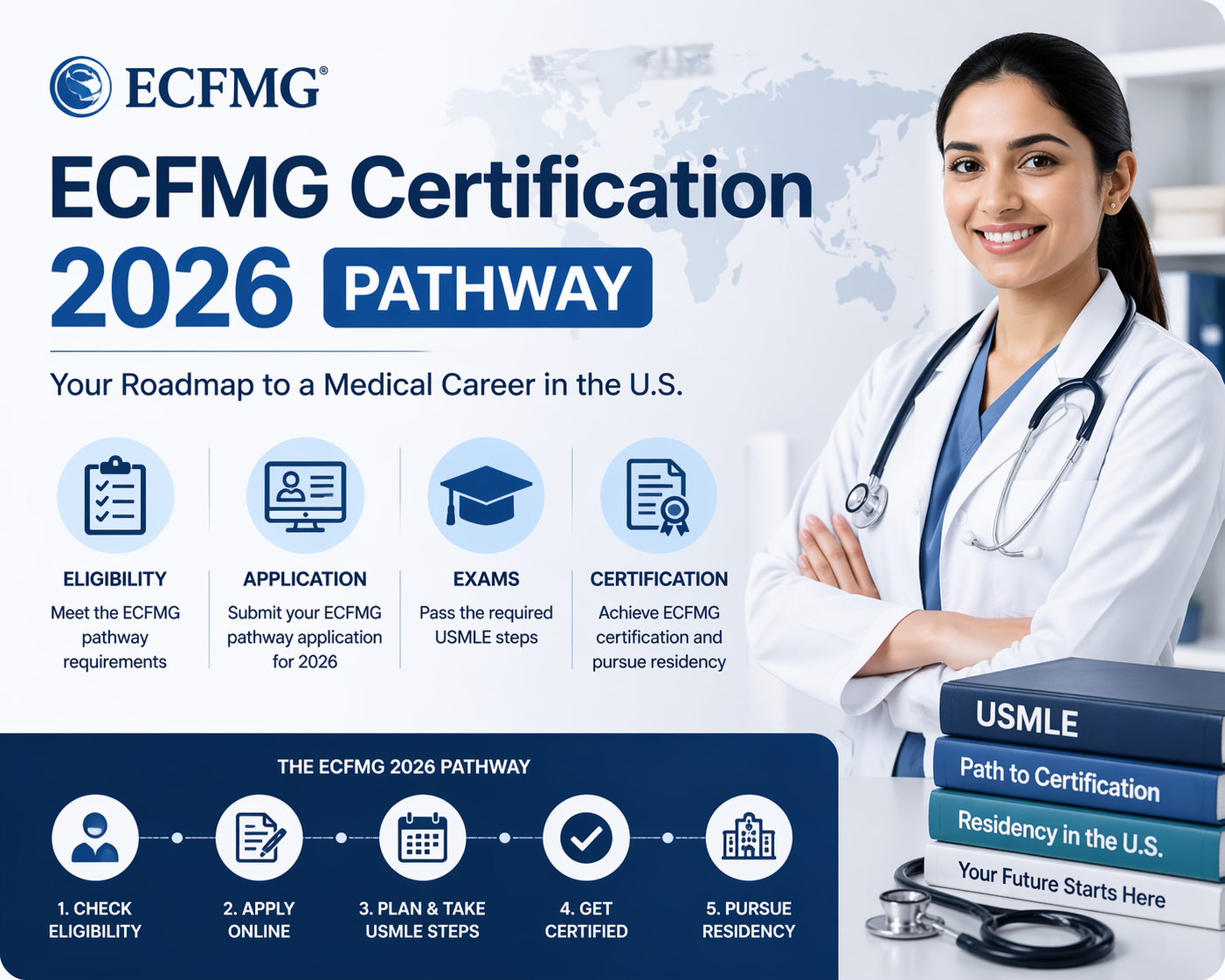
Infographic showing the ECFMG Certification 2026 pathway for international medical graduates, including eligibility, application, exams, certification, and residency steps.

ECFMG Certification 2026 Pathway: The Ultimate Guide for IMGs

For International Medical Graduates (IMGs) planning to work, train, or practice medicine in the United States, the ECFMG certification 2026 pathway is a crucial step. This pathway defines the new process for meeting clinical and communication skills requirements, replacing the previous Step 2 CS exam. In this guide, we explain everything you need to know about the ECFMG 2026 pathway, including eligibility, six different pathways, OET Medicine exam requirements, deadlines, and step-by-step application instructions. By following this guide, you can navigate the certification process efficiently and increase your chances of securing a U.S. residency.

What Is ECFMG Certification?

ECFMG (Educational Commission for Foreign Medical Graduates) verifies that IMGs meet U.S. standards before they enter graduate medical education, such as residencies or fellowships, and before taking licensing exams like USMLE Step 3. Without certification, IMGs cannot join most residency programs in the United States.

Exams like USMLE Step 1 and Step 2 Clinical Knowledge evaluate medical knowledge, but ECFMG certification also requires proof of clinical and communication skills. Therefore, the 2026 Pathways replaced the discontinued USMLE Step 2 CS exam. In addition, these pathways provide multiple ways to demonstrate competence, depending on your background.

Why ECFMG Introduced Pathways

Previously, IMGs used Step 2 CS to show clinical and communication abilities. However, Step 2 CS is no longer available. To address this gap, ECFMG now provides six distinct Pathways that allow applicants to meet these requirements in alternative ways. Moreover, the new system ensures that physicians entering U.S. healthcare demonstrate both competence and effective communication skills.

Overview of 2026 Pathways

The 2026 Pathways system consists of six routes (Pathways 1–6). Each route offers a unique approach to satisfying clinical and communication skills requirements. In addition, all applicants must take the Occupational English Test (OET) Medicine, which measures healthcare-specific English proficiency. This test is mandatory regardless of your native language or medical school training.

Eligibility Requirements for the ECFMG 2026 Pathway

Before applying to any Pathway, IMGs must meet three main criteria:

  1. You must not already meet clinical or communication skills requirements through older exams like Step 2 CS.
  2. Your ECFMG Application in MyIntealth must be verified.
  3. You cannot face any ECFMG restrictions that prevent certification.

After confirming these criteria, select the Pathway that best aligns with your training and experience. Careful selection also reduces processing delays and ensures eligibility for residency matching.

OET Medicine Exam for ECFMG Certification 2026 Pathway

ECFMG requires applicants to achieve the following scores in a single test session:

  • Listening: β‰₯350
  • Reading: β‰₯350
  • Speaking: β‰₯350
  • Writing: β‰₯300

Furthermore, you must report your OET results to ECFMG. Only results from January 1, 2024, or later qualify for the 2026 cycle. Therefore, plan your exam early to meet deadlines and allow time for potential retakes. Check OET Medicine official website for more information.

Detailed Guide to All ECFMG Certification 2026 Pathways

Pathway 1: Licensed Physicians Abroad

Pathway 1 applies if you hold or recently held an unrestricted medical license in another country on or after January 1, 2021.

  • The license must allow independent practice.
  • Applicants who previously failed Step 2 CS must use Pathway 6.

Overall, Pathway 1 suits practicing physicians who can demonstrate recent, unsupervised clinical experience.

Pathway 2: Passed OSCE

Pathway 2 fits graduates whose medical school required and passed an Objective Structured Clinical Examination (OSCE) for licensure.

  • Your OSCE must meet ECFMG standards.
  • Documentation should verify both completion and passing scores.

As a result, this Pathway streamlines the process for candidates from schools with standardized clinical assessments.

Pathway 3: WFME-Recognized School

Apply to Pathway 3 if your medical school is accredited by an agency recognized by the World Federation for Medical Education (WFME).

  • Graduates from these schools may bypass certain clinical evaluations.
  • Moreover, the Pathway demonstrates that your school meets international quality benchmarks.

Pathway 4: NCFMEA-Accredited School

Use Pathway 4 if your school is accredited by agencies deemed comparable to U.S. standards by the National Committee on Foreign Medical Education and Accreditation (NCFMEA).

  • Graduates meet standards similar to U.S. medical education without additional testing.
  • Therefore, this Pathway is efficient for candidates from recognized institutions.

Pathway 5: Dual Degree with U.S. LCME School

Apply to Pathway 5 if you earned a dual degree with a U.S. LCME-accredited medical school.

  • Consequently, training aligns closely with U.S. medical education standards, making certification smoother.

Pathway 6: Mini-CEX Evaluations

Pathway 6 evaluates your clinical skills through Mini-CEX assessments in real outpatient settings.

  • Each encounter assesses interviewing, physical exam, professionalism, and clinical reasoning.
  • Evaluators must meet ECFMG standards and cannot have conflicts of interest.
  • Additionally, this Pathway is suitable for applicants who do not qualify for Pathways 1–5.

Deadlines and Timeline for the 2026 ECFMG Pathway

  • Pathways application deadline: January 31, 2026
  • Document submission cutoff: April 30, 2026 for submitted applications
  • Match eligibility: Submit your Pathways application by January 31 to participate in the 2026 residency Match.

Missing deadlines requires waiting for the 2027 Pathways cycle. Therefore, start preparations well in advance.

Step-by-Step Application Process for ECFMG Certification 2026 Pathway

  1. First, log in to MyIntealth to manage your application.
  2. Next, verify your eligibility for the Pathways.
  3. Then, select the appropriate Pathway based on your licensure and training.
  4. Afterward, submit all required documentation, including licensure, OSCE records, school accreditation proof, Mini-CEX evaluator information (for Pathway 6), and OET results.
  5. Additionally, pay all fees before the deadlines.
  6. Finally, track your application status and respond promptly to requests for additional information.

Following these steps carefully helps you avoid delays and ensures compliance with ECFMG standards.

Certificate Validity and Seven-Year Rule for ECFMG 2026 Pathway

  • You must complete all exams and Pathway requirements within seven years of your first exam.
  • Your ECFMG Certificate can expire if Pathway conditions aren’t met.
  • Completing 12 months of U.S. graduate medical education or obtaining an unrestricted U.S. license makes your certificate valid indefinitely.

Consequently, staying on schedule is crucial to maintaining certification.

Common Mistakes When Applying for ECFMG Certification 2026 Pathway

  1. Skipping OET Medicine β€” mandatory for all Pathways.
  2. Missing deadlines β€” submit applications and documents early.
  3. Providing incomplete documentation β€” verify all accreditation and licensure proofs.
  4. Choosing the wrong Pathway β€” align your background with the correct Pathway.

Moreover, double-check all submissions to prevent unnecessary delays.

Tips for Success in the ECFMG 2026 Pathway

  • Plan your OET exam early to allow for retakes if necessary.
  • Prepare documentation ahead of deadlines to reduce last-minute stress.
  • Track your application status regularly in MyIntealth.
  • Stay informed about upcoming Pathways cycles to anticipate changes.

By following these tips, you can improve your chances of successful certification.

Conclusion

The 2026 ECFMG Pathways provide multiple routes for IMGs to meet U.S. clinical and communication skills requirements. Understanding eligibility, selecting the right Pathway, completing the OET Medicine exam, and submitting all documentation on time allows you to earn ECFMG Certification successfully. Ultimately, this certification enables you to pursue U.S. residency, USMLE Step 3, and eventual licensure.

Celpip study plan 2026 4 week schedule daily routine and preparation tips for high score

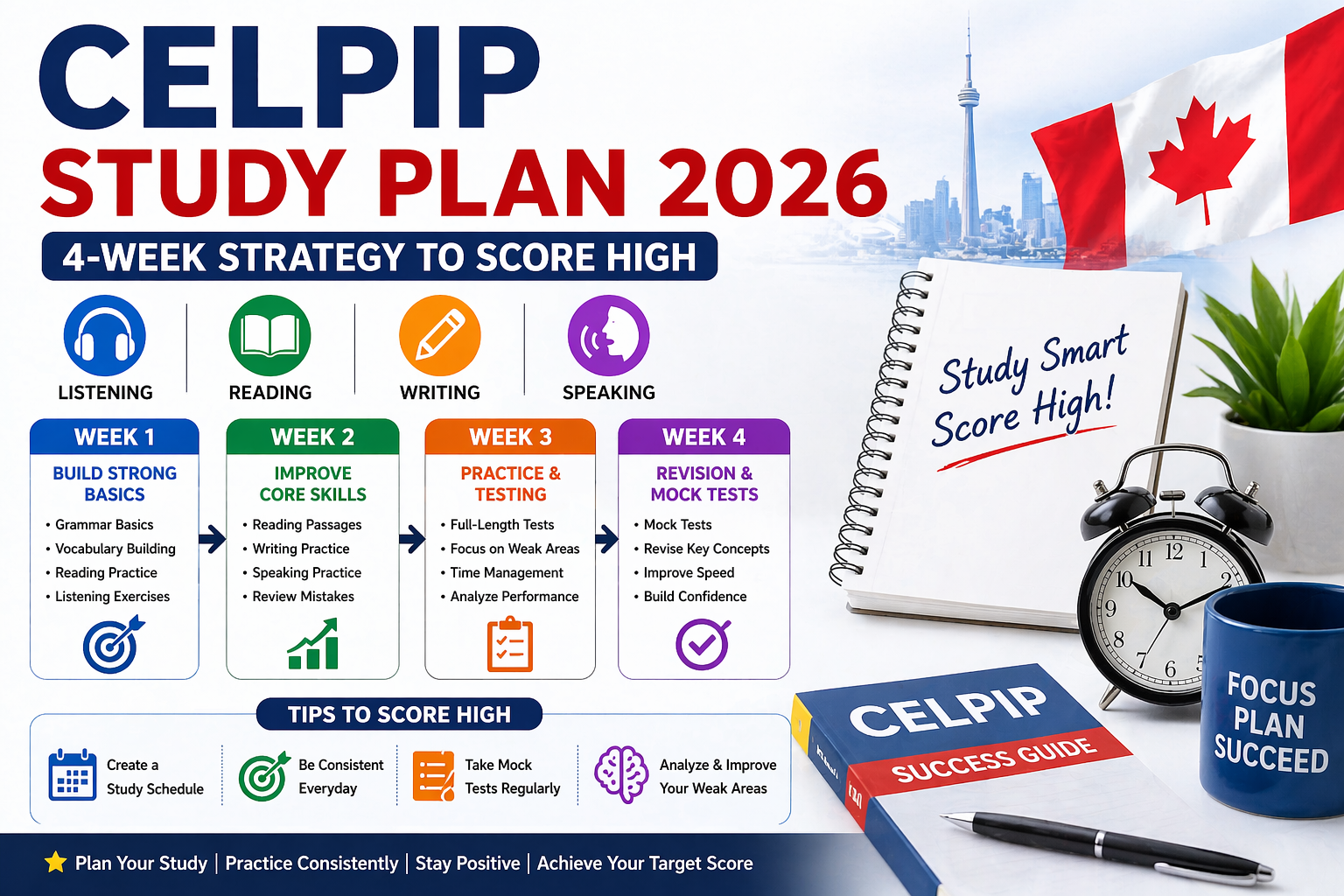
CELPIP Study Plan 2026: 4-Week Strategy to Score High

A well-structured CELPIP study plan is essential if you want to achieve a high score on your first attempt. Since the exam evaluates real-life English skills, random studying is rarely effective. Instead, a focused and strategic approach is required.

The CELPIP exam is fully computer-based, so candidates must also be comfortable with typing and listening through headphones. Because of this format, preparation should include both language improvement and test practice.

This exam is conducted by Paragon Testing Enterprises and accepted by Immigration, Refugees and Citizenship Canada (IRCC). For that reason, proper preparation can directly influence your immigration success.

In this guide, you will learn a complete 4-week study plan, along with daily schedules and practical strategies to improve your score. Before creating a strategy, make sure you understand the full exam structure in this CELPIP exam guide.

🟦 CELPIP Study Plan 2026 Overview

Preparing for the exam requires consistency, discipline, and a clear structure. Without a plan, it becomes easy to lose direction and waste valuable time.

To simplify your preparation, the study plan is divided into four phases:

  • Week 1 focuses on basics
  • Week 2 strengthens core skills
  • Week 3 emphasizes practice
  • Week 4 prepares you for the exam

Each phase builds on the previous one. As a result, your confidence and accuracy improve gradually.

🟦 Week 1 CELPIP Study Plan: Build Strong Basics

The first week should focus on strengthening your fundamentals. Rather than rushing through topics, spend time understanding concepts clearly.

Start with grammar basics and vocabulary building. Alongside that, include reading comprehension exercises in your daily routine.

Short listening exercises should also be practiced regularly. Over time, this improves your ability to understand different accents and contexts.

🟦 Week 2 CELPIP Study Plan: Improve Core Skills

After building your basics, the next step is to develop core skills. At this stage, practice becomes more important than theory.

Reading passages daily can improve comprehension, while writing short emails helps structure your responses better. Speaking practice should also be included using simple everyday topics.

Regular review of mistakes allows you to identify weak areas. Consequently, your overall performance becomes more balanced.

🟦 Week 3 CELPIP Study Plan: Practice and Testing

By the third week, the focus should shift toward applying your knowledge. Instead of learning new topics, use this time to practice extensively.

Full-length tests should be included in your schedule. In addition, pay close attention to areas where you consistently make mistakes.

Careful analysis after each test helps you understand patterns in your errors. This approach leads to faster improvement. You can also use official practice materials available on the CELPIP website to simulate real exam conditions.

🟦 Week 4 CELPIP Study Plan: Final Revision and Mock Tests

As the exam approaches, your preparation should focus on revision and confidence building. At this point, testing your readiness becomes essential.

Mock exams should be taken under real conditions to simulate the actual test environment. Speaking practice can further improve fluency and clarity.

Rather than introducing new material, concentrate on strengthening key concepts. This helps reduce stress and improves retention. In addition, taking a CELPIP practice test regularly will help you track your progress.

🟦 Daily CELPIP Study Plan Schedule

A consistent daily routine plays a major role in effective preparation. However, the schedule should remain practical and easy to follow.

A balanced routine may include:

  • Reading and listening practice for a few hours
  • Writing exercises to improve structure
  • Speaking practice to build confidence

Short breaks between sessions help maintain focus. As a result, productivity remains steady throughout the day.

🟦 Section-wise CELPIP Preparation Strategy

🟨 CELPIP Listening Study Plan

Daily listening practice improves understanding of conversations. Focusing on context helps answer questions more accurately.

Taking notes while listening can also improve retention. Over time, comprehension becomes faster and more precise.

🟨 CELPIP Reading Study Plan

Improving reading speed is essential for this section. Practicing comprehension questions helps identify key ideas quickly.

Understanding the structure of passages makes it easier to answer questions correctly.

🟨 CELPIP Writing Study Plan

Writing practice should focus on clarity and structure. Email writing tasks require proper formatting and tone.

Using simple and clear sentences improves readability. Strong grammar also plays an important role in scoring well.

🟨 CELPIP Speaking Study Plan

Regular speaking practice builds confidence over time. Recording responses allows you to identify areas for improvement.

Clear pronunciation and steady pacing make a strong impression during the test.

🟦 Tips to Score High in CELPIP Study Plan

Effective preparation depends on applying the right strategies.

Consistent practice helps improve accuracy and confidence. At the same time, focusing on weak areas ensures balanced improvement.

Using simple language is often more effective than complex vocabulary. In addition, improving typing speed can save time during the test.

🟦 Common Mistakes in CELPIP Study Plan

Many candidates face challenges due to avoidable mistakes.

Skipping practice tests reduces familiarity with the exam format. Ignoring weak areas slows down overall progress.

Using too many resources can create confusion. As a result, preparation becomes less effective.

🟦 How to Stay Motivated During Preparation

Staying motivated throughout your preparation is important for success.

Setting small daily goals helps maintain focus. Tracking progress can also boost confidence over time.

Taking short breaks prevents burnout and keeps your mind fresh.

🟦 CELPIP Study Plan FAQs

❓ How many hours should I study daily?

A focused study time of 5–6 hours is generally effective.

❓ Is 4 weeks enough for preparation?

With consistent effort and a structured plan, 4 weeks can be sufficient.

❓ Can I prepare without coaching?

Self-study works well if you follow a clear strategy and practice regularly.

🟒 Conclusion

A structured CELPIP study plan is essential for achieving a high score. Consistent practice, regular revision, and careful analysis of mistakes all contribute to better performance.

With the right approach, strong preparation, and confidence, success in the CELPIP exam becomes achievable. If you’re still deciding between exams, compare your options in our CELPIP vs IELTS guide.

Celpip exam 2026 fees pattern eligibility and preparation tips infographic for canada immigration test

CELPIP Exam 2026: Fees, Pattern, Eligibility & Tips

The CELPIP exam 2026 is one of the most important English language tests for individuals planning to live, work, or study in Canada. Since it is widely accepted for immigration and citizenship applications, thousands of candidates take this test every year. Therefore, understanding every aspect of the examβ€”from fees to preparationβ€”is essential for success.

Moreover, unlike many traditional English proficiency tests, CELPIP is entirely computer-based. As a result, candidates must be comfortable using a computer for all sections, including speaking. In addition, the exam focuses on real-life communication skills, making it practical and relevant for everyday situations in Canada.

The test is conducted by Paragon Testing Enterprises and is officially recognized by Immigration, Refugees and Citizenship Canada (IRCC). Consequently, achieving a good score can significantly improve your chances of immigration approval.

In this complete guide, you will learn everything about the CELPIP exam 2026, including fees, pattern, eligibility, scoring system, preparation strategies, and expert tips to score high. If you’re just starting, check out our detailed CELPIP study plan to structure your preparation effectively.

🟦 What is the CELPIP Exam 2026? Complete Overview

The CELPIP (Canadian English Language Proficiency Index Program) is a standardized test designed to evaluate a candidate’s English language proficiency. It measures your ability to communicate effectively in real-life situations, which is especially important for living and working in Canada.

Unlike paper-based exams, CELPIP is fully computer-delivered. This means you complete all sections on a computer, including the speaking test, which is recorded using a microphone. As a result, the process is faster, more efficient, and easier to manage.

Furthermore, the exam uses Canadian accents and contexts. Therefore, it helps candidates prepare for real-world communication in Canada. In addition, the test format is user-friendly, which makes it accessible even for first-time test takers.

🟦 CELPIP Exam 2026 Types: General vs General LS

Before registering, it is important to choose the correct type of CELPIP test based on your goals.

🟨 CELPIP Exam 2026 General Test Details

The CELPIP-General test is the most commonly taken version.

It is required for:

  • Permanent residency applications
  • Professional designation
  • Work-related immigration programs

Since it includes all four language skills, it provides a complete assessment of your English proficiency.

🟨 CELPIP Exam 2026 General LS Test Overview

The CELPIP-General LS test is a shorter version that focuses only on Listening and Speaking.

It is mainly required for:

  • Canadian citizenship applications

Therefore, if your goal is citizenship rather than permanent residency, this test is sufficient.

🟦 CELPIP Exam 2026 Eligibility Criteria and Requirements

One of the biggest advantages of the CELPIP exam is its flexible eligibility criteria. Unlike some other exams, there are no strict academic or professional requirements.

🟨 Basic Eligibility Criteria

  • No minimum educational qualification
  • No strict age limit (recommended 16 years or older)
  • Valid government-issued ID required

Since the eligibility criteria are simple, almost anyone can register for the exam. However, candidates should have a basic understanding of English to perform well.

🟦 CELPIP Exam 2026 Fees: Cost Breakdown and Charges

The exam fee varies depending on your country and location. Therefore, it is important to check the official website before registering.

🟨 Average Fee Structure

  • CELPIP-General: $280–$300 CAD
  • CELPIP-General LS: $195–$205 CAD

In addition, there may be extra charges for:

  • Rescheduling the exam
  • Re-evaluating scores
  • Late registration

As a result, planning your test date carefully can help you avoid unnecessary costs.

🟦 CELPIP Exam 2026 Pattern: Section-wise Structure

Understanding the exam pattern is crucial for effective preparation. The CELPIP-General test includes four sections, each designed to evaluate a specific skill. Once you understand the format, you should practice with a CELPIP practice test to improve your performance.

🟨 CELPIP Exam 2026 Listening Section Format

  • Duration: 47–55 minutes
  • Includes multiple audio tasks

Candidates must listen to conversations and answer questions based on them. Therefore, strong listening skills are essential.

🟨 CELPIP Exam 2026 Reading Section Format

  • Duration: 55–60 minutes
  • Includes passages and comprehension questions

In this section, you need to read and understand different types of texts. Consequently, improving reading speed and comprehension is important.

🟨 CELPIP Exam 2026 Writing Section Tasks

  • Duration: 53–60 minutes
  • Includes two tasks:
    • Writing an email
    • Responding to a survey

Since this section tests your ability to communicate clearly, grammar and structure play a key role.

🟨 CELPIP Exam 2026 Speaking Section Tasks

  • Duration: 15–20 minutes
  • Includes 8 speaking tasks

Your responses are recorded, so clarity, pronunciation, and confidence are essential.

🟦 CELPIP Exam 2026 Scoring System and Score Levels

The CELPIP exam uses a scoring scale from 1 to 12. Each section is scored individually, and your overall performance determines your final result.

🟨 Score Interpretation

  • 10–12 β†’ Advanced proficiency
  • 7–9 β†’ Good proficiency
  • 4–6 β†’ Moderate proficiency

Most immigration programs require a minimum score of 7. Therefore, aiming for a higher score increases your chances of success.

🟦 How to Prepare for CELPIP Exam 2026 Effectively

Preparing for the CELPIP exam requires a structured and consistent approach. Without a clear plan, it is easy to lose focus.

🟨 Build Strong Fundamentals

First, focus on improving grammar, vocabulary, and comprehension. This forms the foundation of your preparation.

🟨 Practice All Four Skills Daily

Since the exam tests listening, reading, writing, and speaking, it is important to practice each skill regularly.

🟨 Take Mock Tests

Mock tests simulate real exam conditions. As a result, they help improve time management and reduce exam anxiety.

🟨 Analyze Your Performance

After each test, review your mistakes carefully. This helps you identify weak areas and improve faster.

🟦 CELPIP Exam 2026 Tips to Score High on First Attempt

🟨 Manage Your Time Effectively

Time management is one of the most important factors in the exam. Therefore, practice completing tasks within the given time.

🟨 Improve Typing Speed

Since the exam is computer-based, fast typing can save valuable time in the writing section.

🟨 Use Clear and Simple Language

Avoid using overly complex vocabulary. Instead, focus on clarity and accuracy.

🟨 Practice Speaking Regularly

Speaking confidently is essential. Therefore, practice speaking on different topics daily.

🟨 Focus on Real-Life English

Since the exam is based on everyday situations, practicing real-life conversations can be very helpful.

🟦 Common Mistakes in CELPIP Exam 2026 Preparation

Even well-prepared candidates can make mistakes. Therefore, being aware of common errors can help you avoid them.

🟨 Lack of Practice

Many candidates underestimate the importance of practice. As a result, they struggle during the exam.

🟨 Poor Time Management

Spending too much time on one question can affect your overall performance.

🟨 Ignoring Weak Areas

Focusing only on strengths can limit your improvement. Instead, work on your weaknesses.

🟨 Overcomplicating Answers

Using complex language incorrectly can reduce your score. Therefore, keep your answers simple and clear.

🟦 Benefits of Taking the CELPIP Exam 2026

The CELPIP exam offers several advantages, especially for individuals planning to move to Canada.

🟨 Faster Results

Results are typically available within 3–4 days. This makes the process quicker compared to other exams.

🟨 Fully Computer-Based

Since the exam is digital, it is more convenient and efficient.

🟨 Canadian Context

The test is designed specifically for Canadian environments, making it more relevant.

🟦 CELPIP Exam 2026 FAQs: Important Questions Answered

❓ Is CELPIP easier than IELTS?

CELPIP is often considered easier because it focuses on practical English and is fully computer-based.

❓ How long is CELPIP valid?

The score is valid for 2 years.

❓ Can I retake the CELPIP exam?

Yes, you can retake the exam as many times as needed.

❓ How long does it take to get results?

Results are usually available within 3–4 days.

🟒 Conclusion

In conclusion, the CELPIP exam 2026 is a crucial step for anyone planning to immigrate to Canada. By understanding the fees, pattern, and eligibility criteria, you can prepare more effectively and avoid unnecessary mistakes.

Moreover, following a structured study plan and practicing consistently will help you achieve a high score. Ultimately, success in the CELPIP exam depends on preparation, confidence, and smart strategies. Still unsure which test to choose? Read our full comparison of CELPIP vs IELTS to make the right decision.

nclex study plan 2026 3 month strategy daily schedule and preparation tips for nursing exam

NCLEX Study Plan 2026: 3-Month Strategy to Pass on First Attempt

A well-structured NCLEX study plan is essential for nursing students who want to pass the exam on their first attempt. Since the NCLEX uses a computer-adaptive testing format, simply reading textbooks is not enough. Instead, a strategic combination of concept learning, practice questions, and revision is required.

Moreover, with the introduction of the Next Generation NCLEX (NGN), the exam now focuses heavily on clinical judgment and decision-making skills. As a result, candidates must adapt their preparation strategies accordingly. Therefore, following a clear and effective plan can significantly improve your chances of success.

Before starting your preparation, it is also important to understand the exam structure set by the National Council of State Boards of Nursing (NCSBN). This ensures that your study approach aligns with the real exam format.

In this guide, you will learn a complete 3-month NCLEX study plan, along with daily schedules, subject priorities, and expert tips to help you succeed. To improve your preparation, you should also practice using the best NCLEX practice exam resources.

🟦 NCLEX Study Plan 2026 Overview

Preparing for the NCLEX requires consistency, discipline, and a clear roadmap. Without a structured plan, time can easily be wasted on less important topics. Consequently, many students feel overwhelmed and lose focus.

To make preparation more manageable, this NCLEX study plan is divided into three phases:

  • Concept learning phase
  • Practice and revision phase
  • Mock test phase

Each phase serves a specific purpose. For example, the first phase focuses on building a strong foundation, while the final phase prepares you for real exam conditions. As a result, this structured approach ensures balanced and effective preparation. The exam follows the updated Next Generation NCLEX format introduced by NCSBN.

🟦 NCLEX Study Plan 2026: 3-Month Strategy

A three-month preparation plan is ideal for most candidates because it provides enough time for learning, revision, and testing. However, consistency is the key to making this plan work.

🟨 NCLEX Study Plan Month 1: Concept Building Phase

During the first month, your primary goal should be to understand core nursing concepts. Rather than memorizing facts, focus on understanding the reasoning behind each topic.

To begin with, start with major subjects such as Medical-Surgical Nursing. At the same time, pay attention to patient care principles and foundational topics.

In addition, solving basic practice questions daily helps reinforce what you learn. Furthermore, creating short notes can make revision easier later. As a result, your understanding becomes stronger and more practical.

🟨 NCLEX Study Plan Month 2: Practice and Revision Phase

Once your concepts are clear, the next step is to focus on practice and revision. At this stage, active learning becomes more important than passive reading.

For instance, aim to solve 50–100 practice questions daily. Meanwhile, reviewing rationales carefully helps you understand mistakes and avoid repeating them.

Moreover, identifying weak areas allows you to focus your efforts more effectively. In addition, revisiting your notes regularly improves retention. Consequently, both your accuracy and confidence increase over time.

🟨 NCLEX Study Plan Month 3: Mock Tests and Final Preparation

As the exam approaches, your focus should shift toward full-length mock tests and final revision. At this point, testing your knowledge becomes essential.

Therefore, attempt 2–3 mock exams per week under real exam conditions. In addition, concentrate on time management and question analysis.

Instead of learning new topics, prioritize revising high-yield areas. As a result, you will feel more confident and prepared on exam day.

🟦 NCLEX Study Plan Daily Schedule

A consistent daily routine plays a crucial role in successful preparation. However, the schedule should remain realistic and sustainable.

🟨 Sample Daily Study Plan

  • 3–4 hours β†’ Concept study
  • 2–3 hours β†’ Practice questions
  • 1–2 hours β†’ Revision

Additionally, taking short breaks between study sessions helps maintain focus and prevents burnout. For example, you can follow a 50-minute study session followed by a 10-minute break.

🟦 Subject Priority in NCLEX Study Plan

Not all subjects carry equal importance. Therefore, prioritizing topics correctly can significantly improve your overall performance.

🟨 High Priority Subjects in NCLEX Study Plan

  • Medical-Surgical Nursing
  • Pharmacology
  • Patient Safety

These subjects contribute heavily to the exam, so mastering them is essential.

🟨 Medium Priority Subjects in NCLEX Preparation Plan

  • Pediatrics
  • Maternity Nursing
  • Mental Health

Although these subjects have slightly lower weightage, they are still important for scoring well.

🟨 Low Priority Subjects in NCLEX Study Plan

  • Basic sciences
  • Rare conditions

However, these topics should still be covered at least once to avoid losing easy marks.

🟦 Smart Tips for NCLEX Study Plan Success

Effective preparation requires smart strategies rather than just hard work. Therefore, applying the right techniques can make a big difference. This structured approach is similar to strategies used in the FMGE study plan.

🟨 Practice Questions Daily in NCLEX Study Plan

Regular practice improves clinical reasoning skills and helps you become familiar with exam patterns.

🟨 Focus on Rationales

Understanding explanations is more important than simply getting the correct answer. This approach strengthens your concepts.

🟨 Use One Main Resource

Using multiple resources can create confusion. Instead, stick to one reliable source and revise it thoroughly.

🟨 Revise Regularly

Frequent revision ensures long-term retention. Therefore, aim to revise each subject multiple times.

🟦 Common Mistakes in NCLEX Study Plan Preparation

Many candidates struggle not because of a lack of effort, but due to avoidable mistakes.

For example:
❌ Skipping practice tests
❌ Ignoring weak areas
❌ Studying without a clear plan
❌ Using too many resources

As a result, preparation becomes inconsistent and less effective. Therefore, avoiding these mistakes is essential for steady progress.

🟦 How to Pass NCLEX Using the Right Study Plan Strategy

Passing the NCLEX requires a combination of strategy, consistency, and confidence.

To improve your chances:

  • Build strong concepts early
  • Practice questions regularly
  • Revise frequently
  • Take mock tests seriously

In addition, maintaining a positive mindset is equally important. Consequently, you will be better prepared to handle exam pressure.

🟦 NCLEX Study Plan FAQs

❓ How many hours should I study daily?

Ideally, 6–8 hours of focused study is recommended.

❓ Is 3 months enough for NCLEX preparation?

Yes, a 3-month plan is sufficient if followed consistently.

❓ Can I pass NCLEX without coaching?

Yes, self-study with the right strategy is enough for most candidates.

❓ How many practice tests should I take?

Taking 5–10 full-length mock exams is generally recommended.

🟒 Conclusion

In conclusion, a well-structured NCLEX study plan is essential for passing the exam successfully. By following a phased approach, practicing consistently, and revising regularly, you can significantly improve your performance.

Ultimately, success in the NCLEX depends on discipline, smart preparation, and continuous improvement. With the right strategy in place, passing on your first attempt becomes an achievable goal. You can also explore more NCLEX preparation guides on our website.

Best NCLEX practice exam 2026 free and paid tests realistic mock exams for nursing students

Best NCLEX Practice Exam 2026: Top Free & Paid Tests to Pass First Try

Choosing the best NCLEX practice exam is one of the most important steps in preparing for your nursing licensure test. Since the NCLEX uses a computer-adaptive testing format, practicing with high-quality mock exams is essential for success. Without proper practice, even well-prepared candidates may struggle to perform under exam conditions.

Moreover, not all practice tests are equally effective. While some resources focus only on basic theory, others provide realistic exam simulations that closely match the actual test. Therefore, selecting the right practice exams can significantly improve both your confidence and performance.

In addition, the introduction of the Next Generation NCLEX (NGN) has changed the way candidates must prepare. The exam now emphasizes clinical judgment and case-based reasoning. As a result, using updated practice tests that reflect this format is crucial.

In this guide, you will explore the best NCLEX practice exams available in 2026. Furthermore, you will learn how to use them strategically, avoid common mistakes, and maximize your chances of passing on the first attempt. To prepare effectively, you should also follow a structured NCLEX study plan. The NCLEX exam is conducted by the National Council of State Boards of Nursing (NCSBN).

🟦 What Makes the Best NCLEX Practice Exam?

Before selecting a resource, it is important to understand what separates a good practice exam from an average one. Many students make the mistake of choosing random question banks without evaluating their quality.

First of all, a high-quality NCLEX practice exam should follow the NGN format. This includes case studies, clinical judgment questions, and scenario-based decision-making tasks. Without these features, your preparation may not align with the actual exam.

In addition, detailed explanations are essential. Simply knowing the correct answer is not enough. Instead, understanding why an answer is correctβ€”and why the others are wrongβ€”helps strengthen your concepts.

Another key feature is adaptive testing. Since the NCLEX adjusts question difficulty based on your performance, practicing with adaptive exams prepares you for the real experience. Consequently, you become more comfortable handling changing difficulty levels.

Furthermore, full-length mock exams are crucial. They help you build stamina, improve time management, and reduce exam anxiety. Without practicing full tests, it can be difficult to maintain focus during the actual exam. The exam follows the updated Next Generation NCLEX format introduced by NCSBN.

🟦 Best NCLEX Practice Exams 2026 (Top Picks)

To help you prepare effectively, here are the top NCLEX practice exams you should consider.

🟨 Kaplan NCLEX Practice (Best Overall)

Kaplan is widely recognized as one of the most reliable platforms for NCLEX preparation. It offers realistic mock exams that closely resemble the actual test format.

Moreover, Kaplan uses adaptive testing technology, which simulates the real exam environment. This feature allows you to experience how question difficulty changes based on your answers.

In addition, the platform provides detailed performance analytics. This helps you identify weak areas and track your progress over time.

As a result, Kaplan is ideal for students who want a complete and structured preparation experience.

🟨 UWorld NCLEX Question Bank (Best for Concept Clarity)

UWorld is highly regarded for its detailed explanations and high-quality questions. Many students consider it one of the most effective tools for understanding complex concepts.

Furthermore, UWorld includes NGN-style case studies, which are essential for modern NCLEX preparation. These questions help improve clinical reasoning skills.

Another advantage is its visual explanations, which make learning more engaging and easier to understand.

Therefore, UWorld is perfect for students who want to strengthen their knowledge and improve accuracy.

🟨 Nurseslabs NCLEX Practice Tests (Best Free Resource)

For students on a budget, Nurseslabs offers a large collection of free practice questions.

In addition, the questions are organized by subject, allowing you to focus on specific topics. This makes it easier to target weak areas.

Although it does not provide adaptive testing, it is still a valuable resource for revision.

Consequently, it is best used alongside other platforms for comprehensive preparation.

🟨 NCLEX Practice Test (Best Free Full-Length Exams)

This platform provides free full-length practice exams with hundreds of questions.

Moreover, it includes answer explanations, which help reinforce learning. As a result, it is useful for simulating real exam conditions without additional cost.

However, it may lack advanced features found in paid platforms.

🟨 Mometrix NCLEX Practice (Best for Beginners)

Mometrix is a great starting point for beginners. It offers simple practice tests and study materials that help build foundational knowledge.

In addition, the platform is easy to use and accessible.

Therefore, it is ideal for students who are just beginning their NCLEX preparation journey.

🟦 Free vs Paid NCLEX Practice Exams

When preparing for the NCLEX, many students wonder whether free resources are enough. While free tools are helpful, they may not provide the depth required for advanced preparation.

🟨 Benefits of Free Practice Exams

Free resources are useful for:

  • Learning basic concepts
  • Practicing topic-based questions
  • Initial preparation

However, they often lack adaptive testing and detailed analytics.

🟨 Benefits of Paid Practice Exams

Paid platforms offer:

  • Realistic exam simulations
  • Adaptive testing (CAT format)
  • Detailed performance analysis

Therefore, they are more effective for final preparation.

🟦 How to Use NCLEX Practice Exams Effectively

Using practice exams correctly is just as important as choosing the right ones. Without a proper strategy, you may not see improvement.

🟨 Start with Topic-Based Practice

Begin by focusing on individual subjects. This helps build a strong foundation before moving to full tests.

🟨 Transition to Full-Length Exams

Once you are comfortable with the basics, start taking full-length practice exams. This helps you understand exam structure and timing.

🟨 Analyze Every Mistake

After each test, review your answers carefully. Understanding your mistakes is key to improving performance.

🟨 Focus on Weak Areas

Identify low-scoring topics and revise them thoroughly. This targeted approach leads to faster improvement.

🟨 Maintain Consistency

Consistent practice is essential. Therefore, make practice tests a part of your daily routine.

Many of these concepts overlap with preparation strategies used in the FMGE study plan.

🟦 Common Mistakes to Avoid

Many students make avoidable mistakes during preparation.

For example:

❌ Taking too many tests without reviewing answers
❌ Ignoring weak areas
❌ Using too many resources
❌ Avoiding adaptive practice exams

As a result, progress becomes slow and inconsistent.

🟦 How Many Practice Tests Should You Take?

There is no fixed number, but most successful candidates follow a structured approach.

Ideally:

  • 5–10 full-length exams
  • Daily practice questions
  • Weekly performance review

This method ensures steady improvement and better exam readiness.

🟦 Frequently Asked Questions (NCLEX Practice Exams)

❓ What is the best NCLEX practice exam?

Kaplan and UWorld are widely considered the best due to their realistic questions and detailed explanations.

❓ Are free NCLEX practice tests enough?

Free tests are useful for beginners, but combining them with paid resources gives better results.

❓ How often should I take practice exams?

During final preparation, taking 2–3 full-length tests per week is recommended.

❓ Do practice exams guarantee success?

No, but they significantly improve your chances when used correctly.

🟒 Conclusion

In conclusion, choosing the best NCLEX practice exam is essential for effective preparation. Moreover, combining high-quality practice tests with consistent revision and analysis can significantly improve your performance.

While free resources provide a good starting point, investing in a reliable paid platform offers a more realistic exam experience. Ultimately, success in the NCLEX depends on disciplined practice, smart strategies, and continuous improvement. You can also explore more exam preparation guides on our website.

Infographic showing DHA exam pattern 2026, including number of questions, duration, multiple-choice format, passing score, and study tips for healthcare professionals.

DHA Exam Pattern 2026: Complete Guide for Healthcare Professionals

Understanding the DHA exam pattern 2026 is the first critical step for healthcare professionals preparing to work in Dubai. Moreover, knowing the exam structure helps candidates plan their preparation efficiently, allocate study time to high-yield topics, and approach questions with confidence. In addition, understanding the pattern reduces exam anxiety because candidates know exactly what to expect on test day. Alongside the pattern, reviewing the DHA exam syllabus ensures you know what subjects to focus on.

This guide provides a comprehensive overview of the DHA exam pattern for doctors, nurses, pharmacists, and allied health professionals. Furthermore, it includes practical strategies, study tips, and common mistakes to avoid so that preparation is more effective and targeted. For the most accurate updates on the DHA exam format, visit the official DHA portal.

Overview of the DHA Exam Pattern 2026

The DHA licensing exam is designed to evaluate clinical knowledge, practical skills, and decision-making abilities. In addition, the exam follows a computer-based multiple-choice format, with no negative marking, and emphasizes case-based and scenario-based questions.

Therefore, understanding the structure is crucial for developing an effective study plan. Similarly, knowing how marks are distributed across subjects ensures candidates focus on the most important topics first. Moreover, practicing under timed conditions simulates the real exam environment and builds confidence. Ensure your degrees are verified through the Ministry of Education UAE before taking the DHA exam.

DHA Exam Pattern 2026 for Doctors

Doctors face a comprehensive exam covering pre-clinical, para-clinical, and clinical subjects. Consequently, preparation requires both in-depth knowledge and application of clinical reasoning.

1. Number of Questions and Duration

  • Total Questions: 120–150 MCQs
  • Duration: 2–3 hours depending on specialty
  • Format: Computer-based
  • Weightage: Clinical subjects 60–65%, para-clinical 20–25%, basic sciences 10–15%

In addition, the questions are mostly scenario-based to test practical decision-making. For example, a patient presenting with chest pain may require integrating physiology, pharmacology, and clinical knowledge to determine the next steps. Therefore, practicing case-based questions is essential for success.

2. Subject Distribution in the DHA Exam Pattern for Doctors

  • Pre-Clinical: Anatomy, Physiology, Biochemistry
  • Para-Clinical: Pathology, Microbiology, Pharmacology, Forensic Medicine, Community Medicine
  • Clinical: Medicine, Surgery, Pediatrics, Obstetrics & Gynecology, Psychiatry, Dermatology, Ophthalmology, ENT, Orthopedics

Similarly, clinical questions assess applied knowledge and critical thinking. In addition, para-clinical and pre-clinical topics support clinical reasoning and often appear integrated into scenario-based questions.

3. Marking Scheme in DHA Exam Pattern 2026 for Doctors

  • 1 mark per question
  • No negative marking
  • Passing requires 50–60% correct answers depending on specialty

Consequently, accuracy is more important than guesswork, and time management is key. Moreover, doctors should simulate full-length exams to build pacing skills.

DHA Exam Pattern for Nurses

Nurses focus on patient care, professional practice, and clinical judgment. In addition, the pattern emphasizes real-life patient scenarios rather than purely theoretical questions.

1. Number of Questions and Duration

  • Total Questions: 90–120 MCQs
  • Duration: 2–2.5 hours
  • Format: Computer-based

Meanwhile, scenario-based questions dominate the exam, testing nurses’ ability to prioritize patient care effectively. Similarly, ethical and communication skills are frequently assessed.

2. Subject Breakdown for Nurses in DHA Exam Pattern 2026

  • Professional Nursing Concepts: 20–25%
  • Clinical Nursing Areas: 50–55%
  • Critical Care & Emergency Nursing: 20–25%

For example, a question may require prioritizing interventions for multiple patients in a ward setting. Therefore, focusing on case-based practice is essential.

3. Marking Scheme

  • 1 mark per question
  • No negative marking
  • Passing requires at least 50% correct answers

Consequently, practicing under timed conditions improves speed and decision-making. In addition, reviewing common nursing procedures enhances confidence.

DHA Exam Pattern for Pharmacists

Pharmacists’ exams test drug knowledge, clinical pharmacy skills, and regulatory understanding. Therefore, preparation should include both scientific knowledge and application in patient care scenarios.

1. Number of Questions and Duration

  • Total Questions: 80–100 MCQs
  • Duration: 2–2.5 hours

In addition, scenario-based questions require pharmacists to evaluate drug interactions, dosing, and patient counseling decisions.

2. Subject Distribution

  • Pharmaceutical Sciences: 30–35%
  • Clinical Pharmacy: 40–45%
  • Pharmacy Practice & Regulations: 20–25%

Similarly, understanding UAE pharmacy laws and regulations is critical. Moreover, pharmacists should practice applying theoretical knowledge to realistic patient scenarios.

3. Marking Scheme

  • 1 mark per question
  • No negative marking
  • Passing requires 50% correct answers

Consequently, combining practice questions with review of regulations ensures both theoretical and practical readiness.

DHA Exam Pattern for Allied Health Professionals

Allied health exams (physiotherapy, radiography, lab sciences) focus on applied clinical knowledge and decision-making. In addition, scenario-based MCQs are used to evaluate real-world competence.

1. Number of Questions and Duration

  • Total Questions: 70–100 MCQs
  • Duration: 2–2.5 hours

2. Subject Distribution

  • Professional Knowledge: 30–40%
  • Clinical Applications: 40–50%
  • Case-Based Scenarios: 10–20%

For example, a physiotherapy candidate may need to design a rehabilitation plan for a post-stroke patient. Similarly, radiography candidates might interpret imaging scenarios for correct diagnostic outcomes.

3. Marking Scheme

  • 1 mark per question
  • No negative marking
  • Passing requires 50% correct answers

In addition, focusing on applied knowledge and practicing cases is critical for success. Consequently, candidates should use multiple resources for thorough preparation.

Key Features Across All DHA Exams

  1. MCQ-Based Format – Most questions are multiple-choice.
  2. Scenario-Based Questions – Realistic patient or clinical scenarios dominate.
  3. No Negative Marking – Encourages educated guessing.
  4. Time-Limited – Each section requires efficient pacing.
  5. Focus on Practical Application – Exams emphasize decision-making over memorization.

Therefore, candidates should focus on comprehension and application. In addition, repeated practice under timed conditions strengthens exam readiness.

Tips to Prepare According to the DHA Exam Pattern

  1. Prioritize High-Weight Topics – Allocate study time based on subject weightage.
  2. Practice Case-Based MCQs – They dominate the exam and improve decision-making.
  3. Simulate Exam Conditions – Take timed full-length tests to manage pacing and stress.
  4. Identify Weak Areas – Focus revisions where performance is low.
  5. Use Multiple Resources – Combine books, online practice, and review guides for comprehensive preparation.

Moreover, frequent self-assessment improves retention and reduces errors. Similarly, tracking progress ensures all topics are reviewed. Alternatively, OET scores can fulfill the English proficiency requirement for the DHA exam. Use our recommended DHA exam books to practice questions that match the exam format. Also, verify your DHA exam eligibility before scheduling your test.

Sample Question Approaches

  • Doctors: Identify differential diagnoses and next steps.
  • Nurses: Prioritize patient care interventions.
  • Pharmacists: Detect drug interactions and suggest adjustments.
  • Allied Health: Develop treatment or rehabilitation plans based on patient scenarios.

In addition, practicing such scenarios mimics exam conditions and builds confidence. Consequently, candidates are better prepared for the real exam.

Common Mistakes in DHA Exam Pattern 2026 Preparation

  • Ignoring high-weight topics
  • Skipping scenario-based questions
  • Failing to time practice tests
  • Over-relying on a single study resource

Therefore, a structured plan that aligns with the exam pattern is essential. Similarly, integrating multiple sources ensures coverage of all exam topics.

Conclusion

Understanding the DHA exam pattern 2026 is essential for passing the licensing exam. By knowing the number of questions, duration, subject weightage, and types of questions, candidates can plan preparation efficiently.

Moreover, practicing scenario-based questions, focusing on high-weight topics, and simulating exam conditions maximizes readiness. In addition, following a structured study plan builds confidence and improves overall performance on exam day.

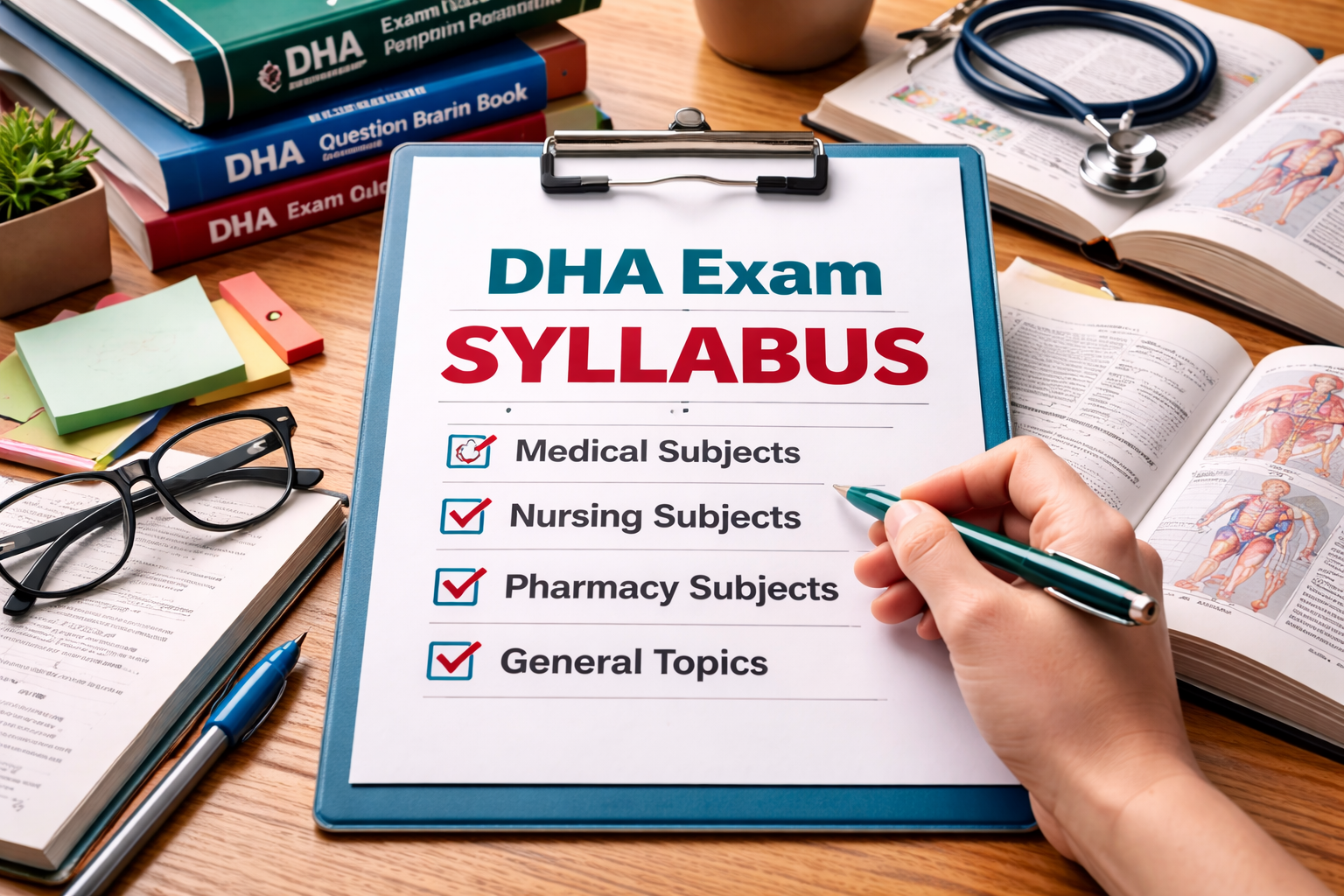
Photograph of a DHA exam syllabus on a clipboard surrounded by textbooks, open anatomy books, sticky notes, a stethoscope, and reading glasses, highlighting medical, nursing, pharmacy, and general subjects for 2026.

DHA Exam Syllabus 2026: Complete Guide for Healthcare Professionals

Preparing for the Dubai Health Authority (DHA) exam can be challenging; however, having a clear understanding of the syllabus makes preparation much more efficient. The DHA exam syllabus 2026 outlines all the topics that healthcare professionals β€” including doctors, nurses, pharmacists, and allied health specialists must study to succeed. Moreover, knowing the syllabus allows you to design a smart study plan, prioritize high-yield areas, and monitor your progress systematically. For the most accurate updates on topics and exam structure, visit the official DHA portal

In addition, focusing on the syllabus ensures that your study time is productive and directed toward topics that matter most for exam performance. Similarly, it helps reduce stress and increases confidence as exam day approaches. Once you understand the topics, it’s also important to know the DHA exam patternΒ to see how these subjects are tested.

Overview: What is the DHA Exam Syllabus?

The DHA exam syllabus is essentially a detailed roadmap of topics covered in the licensing examinations administered by the Dubai Health Authority. It evaluates clinical knowledge, practical application, and adherence to professional standards. In addition, the syllabus differs slightly depending on your profession, yet all candidates must demonstrate competence in clinical reasoning, ethical practice, and evidence-based decision-making.

Therefore, understanding the syllabus is the first critical step in effective exam preparation. Furthermore, it helps candidates identify which areas require more attention and which areas are already strong.

DHA Exam Syllabus for Doctors

The doctor’s DHA exam syllabus is broad, covering all areas relevant to safe clinical practice. Consequently, candidates need to study both core clinical subjects and supporting sciences thoroughly.

1. Basic Medical Sciences (Pre-Clinical)

  • Anatomy
  • Physiology
  • Biochemistry

These topics form the foundation of clinical reasoning. In addition, they allow doctors to understand disease mechanisms and patient presentations. For example, physiology questions often appear in the form of clinical scenarios rather than isolated facts. Ensure your medical or nursing degrees are verified through the Ministry of Education UAE before starting your DHA syllabus preparation.

2. Para-Clinical Subjects

  • Pathology
  • Microbiology
  • Pharmacology
  • Forensic Medicine
  • Community Medicine

Para-clinical subjects bridge basic sciences with clinical practice. Moreover, questions in this section are frequently case-based to test your ability to interpret lab results, microbial diagnoses, and pharmacotherapy applications. Similarly, understanding para-clinical concepts supports better clinical decision-making.

3. Clinical Subjects

  • Medicine
  • Surgery
  • Pediatrics
  • Obstetrics & Gynecology
  • Psychiatry
  • Dermatology
  • Ophthalmology
  • ENT
  • Orthopedics

Clinical subjects dominate the DHA syllabus for doctors. Therefore, candidates should prioritize these topics early in preparation. In addition, clinical questions focus on diagnosis, investigations, and management plans, emphasizing applied knowledge rather than rote memorization.

DHA Exam Syllabus for Nurses

Nurses focus on holistic patient care, professional standards, and clinical competencies. In addition, they must demonstrate the ability to apply knowledge in practical settings.

1. Professional Nursing Concepts

  • Nursing fundamentals
  • Ethics and legal issues
  • Communication skills

Moreover, ethical and legal topics are frequently tested, so nurses must be familiar with professional codes and responsibilities. Similarly, effective communication is a key skill evaluated in the exam.

2. Clinical Nursing Areas

  • Medical-Surgical Nursing
  • Pediatric Nursing
  • Obstetrics & Gynecologic Nursing
  • Psychiatric Nursing
  • Community Health Nursing

These areas assess nurses’ ability to care for patients across various age groups and healthcare settings. For example, nurses should know assessment techniques, nursing diagnoses, interventions, and patient education strategies.

3. Critical Care & Emergency Nursing

  • ICU protocols
  • Emergency procedures
  • Case management

In addition, critical care sections often present scenario-based questions that require rapid clinical judgment. Consequently, practicing case scenarios improves exam readiness and confidence.

DHA Exam Syllabus for Pharmacists

Pharmacists must master topics bridging pharmacological knowledge and clinical application. Therefore, understanding the syllabus in detail is essential.

1. Pharmaceutical Sciences

  • Pharmacology
  • Pharmaceutics
  • Medicinal Chemistry

These subjects cover drug mechanisms, kinetics, and formulation science. Moreover, they form the foundation for clinical decision-making. In addition, understanding drug interactions and mechanisms is critical for patient safety.

2. Clinical Pharmacy

  • Drug therapy management
  • Patient counseling
  • Adverse drug reactions

Similarly, pharmacists must demonstrate competence in supporting safe medication use and providing accurate guidance on therapeutic choices. Consequently, these topics are emphasized in the exam.

3. Pharmacy Practice & Regulations

  • Legal and ethical aspects of pharmacy
  • UAE pharmacy laws
  • Dispensing standards

In addition, familiarizing yourself with local pharmacy regulations ensures compliance with professional standards and improves exam performance. Furthermore, knowledge of regulations is tested regularly.

DHA Exam Syllabus for Allied Health Professionals

Allied health professions (physiotherapy, radiography, lab sciences) have specialized syllabi. For example:

  • Physiotherapy: Musculoskeletal, neurology, cardiorespiratory care
  • Radiography: Radiation safety, imaging techniques
  • Medical Lab Science: Hematology, microbiology, immunology

Therefore, candidates should study according to their specific profession. In addition, case-based MCQs often assess applied knowledge in real-life clinical scenarios. Similarly, reviewing practical applications alongside theory improves performance.

Core Themes Across All DHA Syllabi

  • Clinical knowledge centered on practice standards
  • Evidence-based decision-making
  • Patient safety, ethics, and professional conduct
  • Case-based questions rather than simple recall
  • Application of knowledge in real clinical scenarios

Consequently, candidates should focus on deep understanding rather than memorization. In addition, integrating practice questions into study routines enhances retention and exam readiness.

Tips to Study the DHA Exam Syllabus Effectively

  1. Break Down the Syllabus by Weeks or Months
    • Create a timetable for each section. Moreover, allocate more time for clinical subjects where necessary.
  2. Use High-Yield Resources
    • Textbooks, review books, and practice question banks. In addition, aligning your study materials with the syllabus ensures efficient preparation.
  3. Practice MCQs Consistently
    • Solve daily question sets. Furthermore, analyze mistakes and revisit weak areas.
  4. Join Study Groups or Forums
    • Discussing topics with peers improves understanding. Similarly, exchanging questions reinforces knowledge.
  5. Simulate Exam Conditions Regularly
    • Take timed practice exams to improve focus. As a result, you become more confident on test day.

You can complement your study with our DHA exam books that cover all syllabus topics efficiently. Before starting, make sure you meet the DHA exam eligibility criteria.

Common Syllabus Mistakes to Avoid

  • Ignoring para-clinical areas
  • Cramming last-minute without understanding
  • Skipping case-based practice
  • Not updating knowledge with the latest syllabus

Therefore, review topics systematically and ensure complete coverage. In addition, self-assessment is critical to identify gaps early.

Conclusion

Understanding the DHA exam syllabus 2026 is the cornerstone of successful exam preparation. By studying each subject area, practicing MCQs, and following a strategic study plan, candidates can approach the exam with confidence.

Moreover, breaking the syllabus into manageable sections and monitoring your progress ensures success. In addition, combining theoretical knowledge with practice questions prepares healthcare professionals to meet Dubai’s healthcare standards and excel professionally.

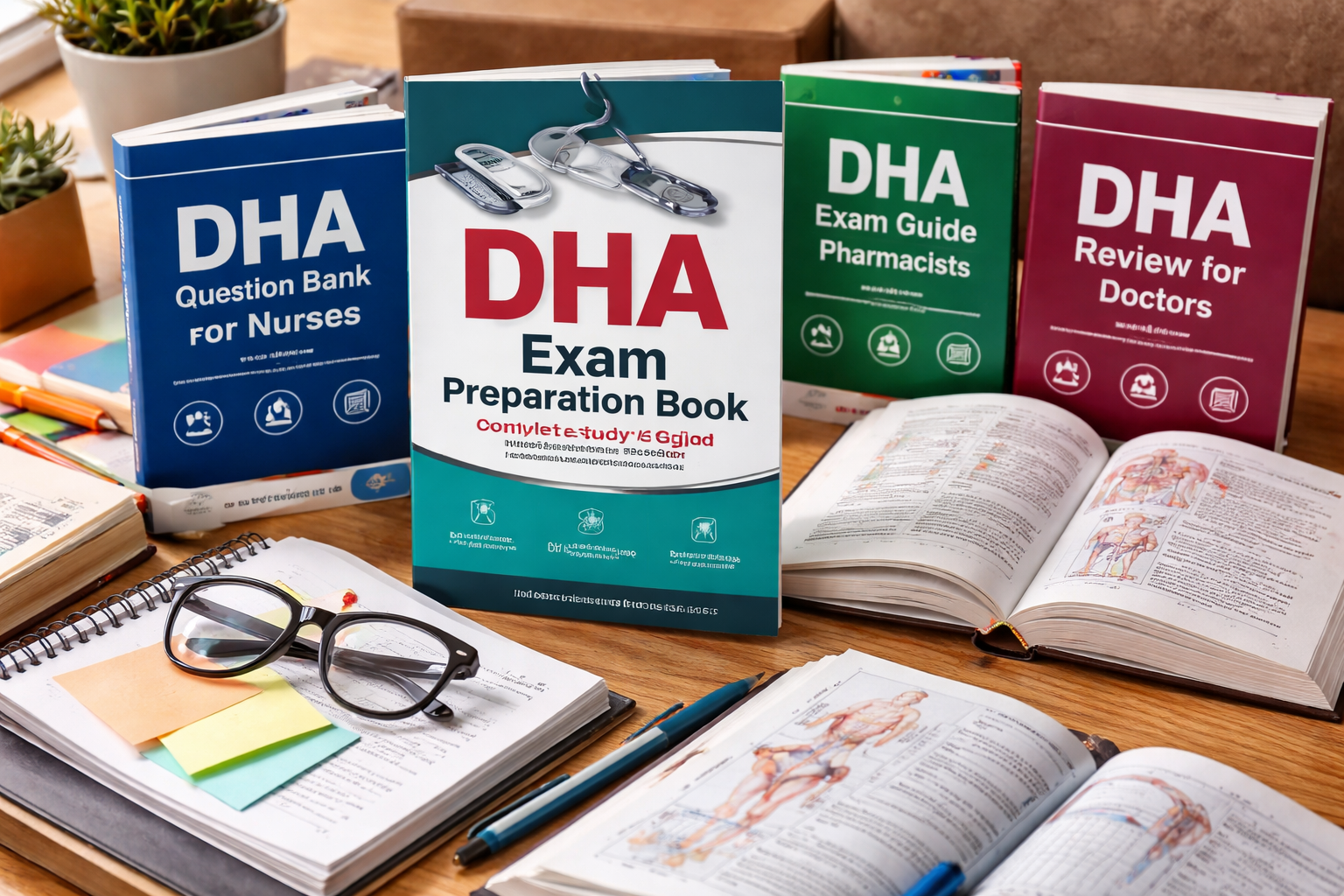
Photograph of DHA exam books for 2026, including guides for doctors, nurses, pharmacists, and allied health professionals, displayed with open textbooks and study materials

Best DHA Exam Books 2026: Top Study Resources for Healthcare Professionals

Preparing for the Dubai Health Authority (DHA) exam can be challenging; however, having the right study resources makes a significant difference. The DHA exam books provide structured guidance, helping healthcare professionals understand the syllabus, practice multiple-choice questions (MCQs), and prepare for clinical scenarios.

Moreover, using recommended books allows candidates to focus on high-yield topics and develop confidence before the exam. Therefore, this guide highlights the top DHA exam books for doctors, nurses, pharmacists, and allied health professionals, and also provides tips on how to use them effectively in 2026.

In addition, following a structured study approach reduces stress and maximizes preparation efficiency. Similarly, it ensures that candidates cover the DHA syllabus comprehensively.

Why Choosing the Right DHA Exam Books Matters

Selecting appropriate DHA exam books is essential for several reasons:

  1. Structured Learning – Books offer a systematic way to cover the DHA syllabus.
  2. High-Yield Topics – Focused guides save time by emphasizing frequently tested areas.
  3. Practice MCQs – Most recommended books include questions similar to the actual exam.
  4. Case-Based Learning – Some books provide scenarios to help apply knowledge in real-world clinical settings.

Consequently, the right study resources can make preparation much more effective. Furthermore, they allow candidates to track their progress and identify weak areas quickly. In addition, well-structured books help avoid unnecessary confusion during the exam. Select books based on the DHA exam syllabusΒ and align your study plan with the DHA exam patternΒ to cover all question types.

Top DHA Exam Books for Doctors

Doctors preparing for the DHA exam need books that cover pre-clinical, para-clinical, and clinical subjects. Therefore, selecting comprehensive resources is essential.

1. DHA Exam Review Book – Doctors Edition

  • Comprehensive coverage of Medicine, Surgery, Obstetrics & Gynecology, Pediatrics, and more.
  • Includes practice MCQs, case scenarios, and detailed explanations.
  • Tip: Use this book for initial review and concept reinforcement. Meanwhile, supplement it with online question banks for additional practice. Ensure your medical degrees are verified through the Ministry of Education UAE before using study guides for DHA exam preparation.

2. MDC Exam Prep – Clinical Guidelines

  • Focused on clinical subjects and patient care protocols.
  • Excellent for case-based questions, which are common in DHA exams.
  • In addition, it helps reinforce key management strategies that are frequently tested.

3. High-Yield Clinical Medicine for DHA

  • Condenses key facts and management guidelines.
  • Provides flowcharts, tables, and diagrams for quick revision.
  • As a result, it is particularly useful in the last 1–2 months before the exam.

Similarly, doctors may supplement these books with specialty-specific references to strengthen weak areas and gain confidence. Moreover, practicing MCQs daily enhances retention of clinical knowledge.

Recommended DHA Exam Books for Nurses

Nurses face questions on patient care, clinical skills, and professional standards, so targeted resources are essential. Therefore, selecting the right books early in preparation is important.

1. DHA Nursing Exam Review Book

  • Covers nursing fundamentals, clinical care, and patient management.
  • Includes practice MCQs and scenario-based questions.
  • Moreover, this book is suitable for both DHA and HAAD exam preparation.

2. Saunders Comprehensive Review for Nursing Licensing

  • Recognized for high-yield questions and test-taking strategies.
  • Helps develop confidence in clinical decision-making. Furthermore, it includes explanations that clarify complex topics.

3. Clinical Nursing Procedures Manual

  • Offers detailed guidance on procedures, protocols, and clinical skills.
  • In addition, it is excellent for hands-on practice and reinforcing procedural knowledge.

Consequently, combining these books ensures a thorough understanding of nursing topics while preparing efficiently for the DHA exam. Similarly, consistent practice improves speed and accuracy on MCQs.

Best DHA Exam Books for Pharmacists

Pharmacists require books covering drug mechanisms, pharmacology, and clinical pharmacy applications. Therefore, using updated and high-yield resources is essential for passing the exam.

1. DHA Pharmacy Exam Guide

  • Comprehensive coverage of pharmacology, clinical pharmacy, and regulations.
  • Includes practice questions with explanations.
  • Moreover, it is updated for 2026 to align with current DHA exam patterns.

2. Remington: The Science and Practice of Pharmacy

  • Focuses on drug properties, mechanisms, and applications.
  • Suitable for high-yield topics relevant to DHA exams. In addition, it is widely used by practicing pharmacists for reference.

3. Pharmacy Licensing Exam Review Manual

  • Prepares candidates for timed exams and pattern-specific MCQs.
  • Therefore, using this book helps simulate the actual exam experience.

Similarly, pharmacists may supplement these resources with online DHA question banks for improved readiness. Consequently, this ensures comprehensive preparation across all subjects.

Top DHA Exam Books for Allied Health Professionals

Allied health professionals include physiotherapists, radiographers, lab technicians, and other specialists. Therefore, using specialized resources is crucial.

  • Allied Health DHA Exam Guide – Covers professional knowledge, clinical applications, and MCQs.
  • Clinical Case-Based Practice for DHA – Scenario-based questions improve practical understanding.
  • HAAD/DHA Combined Exam Practice Book – Useful for reviewing MCQs across allied health specialties.

In addition, practicing with multiple books ensures comprehensive coverage and better preparedness. Consequently, candidates are more confident during the actual exam. Moreover, integrating case-based learning improves critical thinking skills.

How to Use DHA Exam Books Effectively

  1. Start Early – Begin preparation 6–8 months before the exam to cover all subjects.
  2. Focus on High-Yield Topics – Prioritize areas frequently tested by DHA.
  3. Practice Daily – Solve MCQs and case-based questions every day.
  4. Create Revision Notes – Summarize key points from each book for quick review.
  5. Simulate Exam Conditions – Take full-length mock tests to improve time management.

Moreover, combining books with online resources helps reinforce learning. In addition, reviewing questions in a timed format improves accuracy under exam conditions. Similarly, frequent revision ensures retention of critical facts. Before investing in study materials, always confirm your DHA exam eligibility

Where to Buy DHA Exam Books

  • Official DHA Recommended Resources – Check DHA website for updated editions.
  • Amazon, Book Depository, or Local Bookstores – Most DHA exam books are available online.
  • Online PDFs and eBooks – Digital versions are convenient for mobile or tablet study.

Therefore, always use the latest edition to ensure alignment with current DHA syllabus and exam format. Moreover, digital versions are ideal for quick access while commuting or studying remotely.

Additional Study Resources

  • Online DHA Question Banks – Offers timed quizzes and instant feedback.
  • Video Lectures and Tutorials – Useful for visual learners and practical demonstrations.
  • Peer Study Groups – Discussing case studies improves understanding and recall.
  • Mobile Apps – DHA practice apps provide on-the-go MCQ practice.

Consequently, integrating multiple resources ensures comprehensive preparation and increases exam readiness. In addition, combining traditional books with online practice helps simulate the real exam environment.

Common Mistakes to Avoid While Using DHA Exam Books

  • Over-reliance on one book – Supplement with multiple sources.
  • Ignoring clinical scenarios – DHA exams often test real-life patient management.
  • Skipping practice MCQs – Daily question practice is critical.
  • Not timing mock tests – Time management is essential to complete the exam.

In addition, reviewing errors from previous practice tests helps identify areas that need reinforcement. Similarly, regular self-assessment ensures readiness for the exam day.

FAQs on DHA Exam Books

Q1: Which DHA exam book is best for doctors?

  • DHA Exam Review Book – Doctors Edition is highly recommended for comprehensive coverage.

Q2: Can nurses use the same books for HAAD exams?

  • Yes, books like Saunders Comprehensive Review for Nursing Licensing work for both DHA and HAAD exams.

Q3: Are digital versions effective?

  • Absolutely. PDFs and eBooks allow flexible study on mobile devices or tablets.

Q4: How many books should I use?

  • 2–3 main books per profession, supplemented with online practice materials, are usually sufficient.

Moreover, consistently reviewing materials ensures retention and improved exam performance. Consequently, candidates are more confident during the exam.

Conclusion

Using the right DHA exam books is critical for exam success. For 2026, combining review books, MCQ practice guides, and case-based manuals provides a structured and effective preparation plan. In addition, consistent study, daily practice, and focusing on high-yield topics ensures healthcare professionals pass the DHA exam confidently.

Furthermore, regularly updating study resources with latest editions and online materials maximizes readiness and minimizes surprises on exam day. Consequently, integrating books, practice tests, and case-based learning creates a comprehensive DHA exam preparation strategy.

Infographic showing DHA exam eligibility 2026 for healthcare professionals, including qualifications, experience, and required documents for doctors, nurses, pharmacists, and allied health.

DHA Exam Eligibility 2026: Complete Guide for Healthcare Professionals

For healthcare professionals aspiring to work in Dubai, understanding the DHA exam eligibility is a critical first step. The Dubai Health Authority (DHA) regulates licensing for medical, dental, nursing, pharmacy, and allied health professionals. Without meeting DHA’s eligibility criteria, candidates cannot register for or appear in the licensing exam. All healthcare professionals must check the official DHA portal for updated exam eligibility requirements.

Moreover, eligibility verification ensures that professionals meet international healthcare standards, which protects patients and maintains Dubai’s high medical quality. Therefore, this guide will cover eligibility criteria for doctors, nurses, pharmacists, and allied health professionals, along with required documents, experience requirements, and practical tips to streamline the process.

In addition, by following this guide, you can review the DHA exam syllabusΒ and understand the DHA exam patternΒ for effective preparation.

Who Needs to Take the DHA Exam?

The DHA exam is mandatory for all healthcare professionals seeking to practice in Dubai, unless they qualify for an exemption based on international agreements or existing licensure.

  • Doctors and Dentists: Any medical or dental professional with a foreign degree must clear the exam to work in Dubai hospitals or clinics.
  • Nurses and Midwives: Nurses with degrees or diplomas from recognized institutions must meet DHA requirements and pass the licensing exam.
  • Pharmacists: Pharmacy graduates must satisfy DHA’s eligibility criteria, including verification of their license from the home country.
  • Allied Health Professionals: This category includes physiotherapists, radiographers, lab technicians, dietitians, and other specialists. Similarly, DHA specifies eligibility based on education, professional registration, and experience.

In addition, even if you have experience abroad, DHA requires verification of documents and professional standing before allowing exam registration. Consequently, it is essential to complete all verification steps early.

DHA Exam Eligibility for Doctors

Doctors face the strictest criteria because they are directly responsible for patient care. Therefore, understanding each requirement is crucial.

1. Educational Qualification

  • An MBBS or equivalent degree from a recognized medical institution is required.
  • The degree must be verified by the Ministry of Education and DHA.
  • In some cases, specialties may require additional postgraduate qualifications, such as MD, MS, or board certification. Moreover, possessing advanced degrees can improve your chances for faster approval.

2. Clinical Experience Requirements

  • A minimum of 1–2 years of post-graduate clinical experience is required, depending on specialty.
  • Experience must be relevant to the candidate’s intended field of practice in Dubai.
  • Meanwhile, internship experience counts if it is recognized by the home country’s medical council.

3. Internship or Residency

  • Completion of a compulsory internship or residency program is mandatory.
  • Moreover, rotations across major specialties during the internship enhance DHA recognition.
  • Verification of certificates by the home country authority is also required. As a result, doctors can demonstrate sufficient practical experience.

4. Good Standing Certificate

  • Issued by the licensing authority of the country where the candidate last practiced.
  • Confirms that the professional has no malpractice records or disciplinary actions.
  • The certificate is valid for 6 months prior to submission to DHA.

5. Additional Requirements

  • English proficiency is required, usually demonstrated by IELTS, OET, or similar tests.
  • DHA may request reference letters or work experience verification for certain specialties. Consequently, candidates should prepare these documents in advance.

DHA Exam Eligibility for Nurses and Midwives

Nurses and midwives also have clear eligibility requirements. Similarly, it is important to satisfy each criterion before applying.

1. Educational Qualification

  • Diploma or degree in nursing or midwifery from a recognized institution.
  • Programs must be accredited and meet international standards.

2. Clinical Experience

  • Typically, 1–2 years of work experience in a clinical setting is required.
  • Experience should demonstrate competence in patient care. In addition, hands-on experience in specialized units improves eligibility.

3. Professional Registration

  • Must hold a valid license from the home country.
  • Moreover, some professionals may need a no-objection certificate from their employer.

4. Good Standing Certificate

  • Confirms no disciplinary actions or malpractice complaints.
  • Required for all applications. Consequently, verifying this certificate early avoids delays.

DHA Exam Eligibility for Pharmacists

Pharmacists must meet both educational and professional requirements. Therefore, careful documentation is essential.

  • Degree in Pharmacy from a recognized institution.
  • Minimum 1 year of clinical or community pharmacy experience.
  • Valid pharmacy license in the home country.
  • Submission of Good Standing Certificate and proof of practical training in pharmacy practice.
  • Furthermore, English proficiency may be required depending on the position and license type.

As a result, pharmacists can ensure smooth approval by preparing all documents ahead of time.

DHA Exam Eligibility for Allied Health Professionals

Allied health professionals include a wide range of specialists. Similarly, DHA requirements vary by profession:

  • Recognized degree or diploma in the relevant field (physiotherapy, lab sciences, radiography, etc.).
  • Minimum 1 year of clinical experience in a hospital or healthcare setting.
  • Valid professional licensure or registration from the home country.
  • Good Standing Certificate verifying no disciplinary issues.

In addition, for some specialties like radiology or physiotherapy, DHA may request specific training courses or certifications. Consequently, it is important to check the DHA portal regularly for updates.

Required Documents for DHA Exam Eligibility

Ensuring you have all necessary documents is critical. Otherwise, approval will be delayed. Typical requirements include:

  1. Degree certificate and transcripts
  2. Internship or residency completion certificate
  3. Good Standing Certificate from home country licensing authority
  4. Passport copy
  5. Professional license from the home country
  6. Passport-size photographs
  7. English proficiency certificate (if required)
  8. NOC from previous employer (if applicable)

Therefore, always double-check the DHA official portal before submission to avoid rejections. In addition, having digital and physical copies ensures smooth processing.

Step-by-Step Guide to Verify DHA Exam Eligibility

  1. Check profession-specific criteria on DHA’s website.
  2. Gather all required documents and ensure they are notarized or attested.
  3. Submit an eligibility application through DHA’s online portal.
  4. Wait for approval, which usually takes 2–4 weeks.
  5. Once approved, register for the DHA licensing exam.

In addition, keep digital copies for backup and verification. Consequently, you can avoid delays and last-minute issues.

Tips to Streamline DHA Exam Eligibility

  • Begin verification 6–8 months before your exam.
  • Ensure certificates are attested by the relevant authorities.
  • Maintain digital copies for submission.
  • Track expiration dates for Good Standing Certificates and licenses.
  • Furthermore, check DHA updates regularly for changes in eligibility rules.

Consider using our DHA exam booksΒ to guide your studies once eligibility is confirmed.

Common Challenges and How to Avoid Them

  • Incomplete or missing documents: Double-check all requirements.
  • Expired Good Standing Certificates: Ensure validity is within 6 months.
  • Wrong attestation format: Follow DHA guidelines.
  • Experience verification delays: Request letters early from previous employers.

Consequently, using a checklist approach ensures smooth approval. Moreover, staying organized reduces stress and avoids errors.

FAQs on DHA Exam Eligibility

Q1: Can I take the DHA exam if I have less than 1 year of experience?

  • Usually no. Most professions require at least 1 year of post-qualification experience.

Q2: Do I need to submit my internship certificates?

  • Yes. DHA requires proof of internship or residency completion. In addition, missing certificates will delay eligibility approval.

Q3: Can I apply while waiting for my Good Standing Certificate?

  • No. All documents must be complete before DHA processing.

Q4: Are there exceptions for UAE nationals or certain countries?

  • Some exemptions exist; check DHA’s official portal for details. Moreover, eligibility rules may change periodically.

Conclusion

Meeting the DHA exam eligibility requirements is the first critical step for healthcare professionals aiming to work in Dubai. By verifying your education, experience, and documents, you can avoid delays and focus on preparing for the exam. In addition, following a structured approach ensures smooth processing, faster approval, and a clear path to practice in Dubai.

Moreover, start early, gather all documents, and follow DHA guidelines precisely. As a result, proper planning today will ensure success tomorrow.