FMGE study plan 2026 6 month strategy daily schedule and preparation tips infographic

FMGE Study Plan 2026: 6-Month Strategy to Pass in First Attempt

A well-structured FMGE study plan is the foundation for success in the Foreign Medical Graduate Examination. Since the exam is mandatory for foreign medical graduates who want to practice medicine in India, proper preparation becomes essential. Moreover, the syllabus is vast, and without a clear roadmap, it is easy to feel overwhelmed.

Therefore, having a step-by-step study plan can help you stay focused, consistent, and confident throughout your preparation journey. In addition, understanding how to divide your time between subjects, revision, and practice plays a crucial role in improving your performance. he FMGE exam is conducted by the National Board of Examinations in Medical Sciences (NBEMS).

Before starting your preparation, it is also important to review the FMGE exam syllabus and FMGE exam pattern. These elements guide your study strategy and help you prioritize effectively. As a result, you can avoid wasting time on low-yield topics.

In this guide, you will learn a complete 6-month FMGE study plan, along with daily schedules, subject priorities, and smart preparation tips to help you pass on your first attempt.

🟦 FMGE Study Plan 2026 Overview for First Attempt Preparation

Preparing for FMGE requires more than just reading textbooks. Instead, a structured approach that combines concept building, revision, and practice is necessary for success. Without a plan, even the most dedicated students may struggle to complete the syllabus on time. The syllabus follows guidelines from the National Medical Commission (NMC).

To make preparation manageable, the FMGE study plan is divided into three key phases:

  • Concept building phase
  • Revision phase
  • Mock test phase

Each phase serves a specific purpose. For example, the first phase focuses on understanding concepts, while the second phase strengthens memory through revision. Finally, the last phase improves accuracy and confidence through mock tests.

As a result, following a phased strategy ensures complete preparation without unnecessary stress.

🟦 FMGE Study Plan 2026: 6-Month Strategy to Pass Easily

A six-month timeline is ideal for FMGE preparation because it allows sufficient time for learning, revision, and practice. However, consistency is the key to making this plan work effectively.

🟨 Months 1–3: Concept Building Phase

During the first three months, your primary goal should be to build strong concepts. Instead of rushing through topics, focus on understanding the fundamentals clearly. This stage forms the backbone of your preparation.

To begin with, start with high-weightage subjects such as Medicine, Surgery, and Pathology. These subjects contribute significantly to the exam, so mastering them early gives you an advantage.

In addition:

  • Study 2–3 subjects simultaneously to maintain variety
  • Make concise notes for quick revision later
  • Solve basic MCQs after each topic

Furthermore, try to understand concepts rather than memorizing them. This approach helps you tackle application-based questions more effectively.

By the end of this phase, you should have a strong conceptual understanding of most subjects.

🟨 Months 4–5: Revision and MCQ Practice

Once your concepts are clear, the next step is to shift your focus toward revision and intensive MCQ practice. At this stage, active recall becomes more important than passive reading.

During these two months:

  • Revise all subjects at least once
  • Solve previous year questions regularly
  • Focus on weak areas identified during practice

Moreover, analyzing your mistakes is just as important as solving questions. Instead of ignoring incorrect answers, take time to understand why you got them wrong.

In addition, try to improve your speed and accuracy while solving MCQs. This will help you perform better under exam conditions.

Consequently, this phase strengthens your retention and boosts your confidence.

🟨 Month 6: Mock Tests and Final Revision

The final month is crucial because it determines how well you perform in the actual exam. During this period, your focus should be on testing yourself and refining your preparation.

To maximize results:

  • Attempt 2–3 full-length mock tests every week
  • Revise high-yield topics multiple times
  • Focus on improving weak areas

Furthermore, simulate real exam conditions while taking mock tests. This helps you manage time effectively and reduces exam anxiety.

In addition, avoid learning new topics at this stage. Instead, concentrate on revising what you have already studied.

As a result, you will enter the exam with confidence and clarity.

🟦 FMGE Study Plan Daily Schedule for Effective Preparation

A consistent daily routine is essential for covering the syllabus effectively. However, your schedule should be realistic and flexible to prevent burnout.

🟨 Sample Daily Study Schedule

  • 3–4 hours β†’ Concept study
  • 2–3 hours β†’ MCQ practice
  • 1–2 hours β†’ Revision

In addition, taking short breaks between study sessions can help maintain focus and productivity.

For example, you can follow a pattern of studying for 50 minutes and then taking a 10-minute break. This technique improves concentration and reduces fatigue.

Moreover, try to study at the same time every day. A fixed routine helps build discipline and consistency.

🟦 FMGE Study Plan: Subject Priority and Weightage Strategy

The subject distribution is similar to the NEET PG 2026 syllabus, which is also based on the MBBS curriculum.

🟨 High Priority Subjects

These subjects have the highest weightage and should be your main focus:

  • Medicine
  • Surgery
  • Obstetrics & Gynecology
  • Community Medicine

Because these subjects contribute a large number of questions, mastering them can significantly boost your marks.

🟨 Medium Priority Subjects

These subjects are also important and should not be ignored:

  • Pathology
  • Pharmacology
  • Microbiology

Although they have slightly lower weightage, they are scoring if prepared well.

🟨 Low Priority Subjects

These subjects have relatively lower weightage but are still essential:

  • Anatomy
  • Physiology
  • Biochemistry

Therefore, covering them at least once is necessary to avoid losing easy marks.

🟦 FMGE Study Plan Tips for Smart and Effective Preparation

Studying hard is important, but studying smart is even more effective. Therefore, using the right strategies can improve your efficiency.

🟨 Focus on High-Yield Topics

Instead of trying to cover everything, prioritize frequently asked topics. This saves time and increases your chances of scoring well.

🟨 Stick to One Main Resource

Using too many books or courses can create confusion. Instead, choose one reliable source and revise it multiple times.

🟨 Practice MCQs Daily

Daily MCQ practice helps you understand exam patterns and improves your problem-solving skills. Moreover, it builds confidence over time.

🟨 Revise Regularly

Revision is essential for long-term retention. Therefore, aim to revise each subject at least 3–4 times before the exam.

🟦 Common Mistakes in FMGE Study Plan Preparation to Avoid

Many students fail not because they lack knowledge, but because they make avoidable mistakes.

Some common mistakes include:

❌ Ignoring revision
❌ Avoiding MCQ practice
❌ Using too many study resources
❌ Poor time management

As a result, even well-prepared candidates may struggle in the exam.

To avoid these issues, follow a structured plan and stay consistent throughout your preparation.

🟦 How to Pass FMGE Using the Right Study Plan Strategy

Passing FMGE in the first attempt is achievable with the right approach. However, it requires dedication and smart planning.

To increase your chances of success:

  • Build strong concepts during the initial phase
  • Practice MCQs regularly
  • Revise multiple times
  • Take mock tests seriously

In addition, maintaining a positive mindset is equally important. Confidence and consistency can make a significant difference in your performance.

🟦 FMGE Study Plan FAQs: Important Questions Answered

❓ How many months are enough for FMGE preparation?

A 6-month study plan is sufficient if followed consistently.

❓ How many hours should I study daily?

Ideally, 6–8 hours of focused study is recommended.

❓ Is FMGE difficult to pass?

Although the exam is challenging, it is manageable with proper preparation.

❓ Can I pass FMGE without coaching?

Yes, self-study combined with the right strategy is enough.

🟒 Conclusion

In conclusion, a well-structured FMGE study plan is essential for passing the exam successfully. Moreover, dividing your preparation into phases helps you manage the syllabus more effectively.

By focusing on high-weightage subjects, practicing MCQs regularly, and revising consistently, you can significantly improve your performance. Ultimately, success in FMGE depends on discipline, smart planning, and continuous effort.
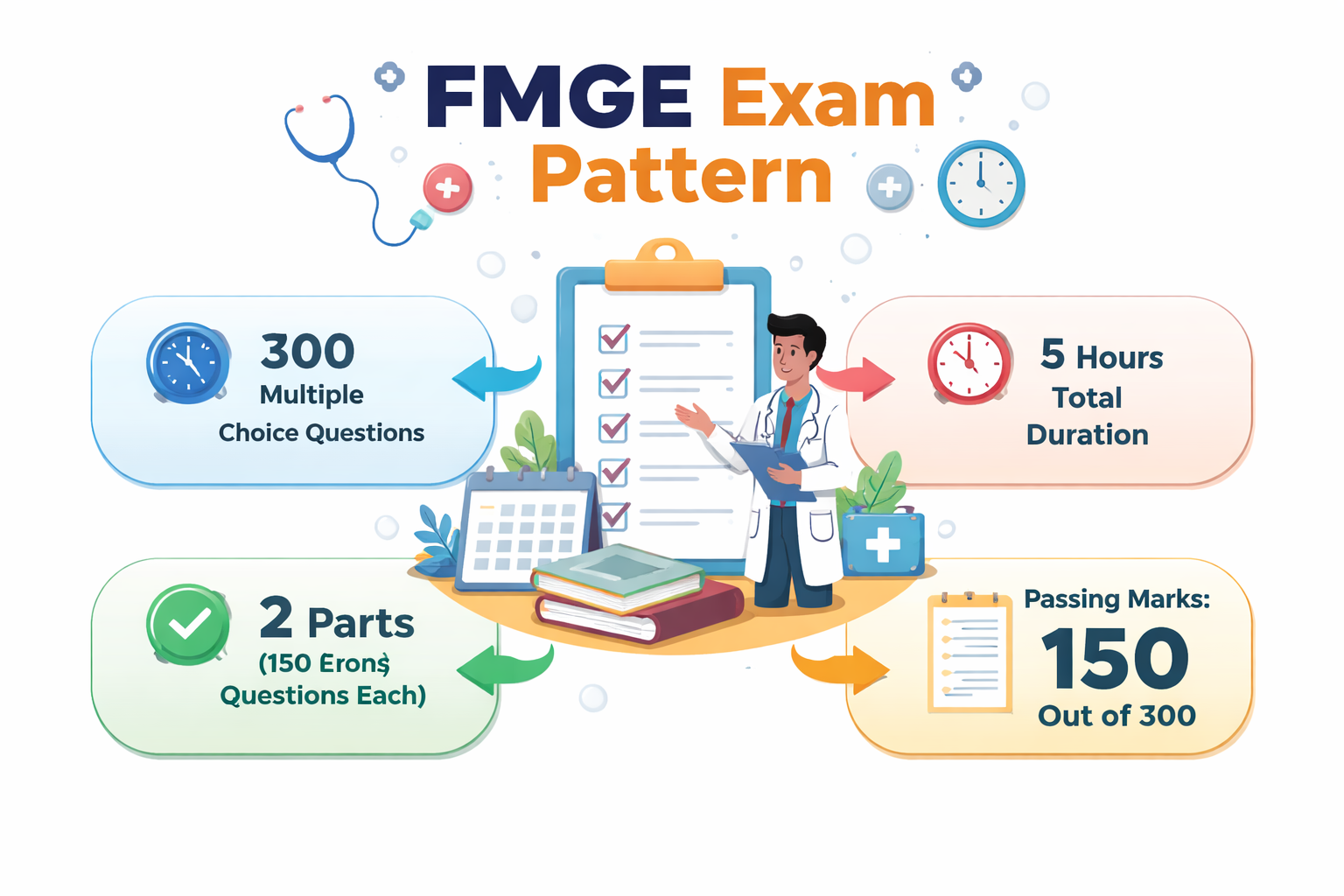
Infographic showing FMGE exam pattern 2026 with 300 MCQs, 5-hour duration, 2 parts, passing marks 150, and subjects for Pre-Clinical, Para-Clinical, and Clinical exams.

FMGE Exam Pattern 2026: Complete Guide for Foreign Medical Graduates

The FMGE exam pattern 2026 is essential for foreign medical graduates who want to practice medicine in India. The Foreign Medical Graduate Examination (FMGE) tests the knowledge and clinical skills of Indian citizens who have completed their medical degrees abroad. Understanding the FMGE syllabus, subjects, and marking scheme is critical for effective preparation, as it helps candidates focus on high-yield topics and maximize their chances of passing on the first attempt. Moreover, a structured approach ensures you cover all important areas systematically. The official FMGE notificationΒ by the National Board of Examinations provides detailed eligibility and exam updates.

FMGE Exam Pattern 2026 Structure, Duration & Format | Computer-Based Test

The FMGE is conducted in a computer-based test (CBT) format, which allows for fast and secure evaluation. Specifically, the exam consists of:

  • Total Questions: 300 multiple-choice questions (MCQs)
  • Duration: 3.5 hours (210 minutes)
  • Language: English
  • Mode: Online (CBT)

Therefore, practicing online mock tests is crucial. Additionally, familiarity with the interface can reduce anxiety and improve time management during the exam.

FMGE Syllabus and Subjects Explained | Pre-Clinical, Para-Clinical & Clinical

The FMGE syllabus mirrors the Indian MBBS curriculum and includes questions from pre-clinical, para-clinical, and clinical subjects.

Subject Category Subjects Included Approx. Question Distribution
Pre-Clinical Anatomy, Physiology, Biochemistry 50
Para-Clinical Pathology, Microbiology, Pharmacology, Forensic Medicine, Social & Preventive Medicine 75
Clinical Medicine, Surgery, Obstetrics & Gynecology, Pediatrics, Ophthalmology, ENT, Orthopedics, Psychiatry, Dermatology 175

Consequently, clinical subjects carry the highest weight, so prioritizing Medicine, Surgery, and Obstetrics & Gynecology is advisable. However, pre-clinical and para-clinical subjects are still important since these questions are usually straightforward and can be scored quickly. You can check the complete FMGE syllabus for a detailed breakdown of all subjects.

FMGE Marking Scheme and Passing Criteria 2026

The FMGE marking scheme is simple:

  • Each question carries 1 mark
  • No negative marking for incorrect answers

As a result, candidates should attempt all questions. Moreover, educated guessing increases the chances of scoring without any penalty.

To pass, candidates must achieve at least 150 out of 300 marks (50%). Many candidates fail because they ignore certain subjects or fail to revise systematically. Therefore, balanced preparation across all subjects is essential. Foreign medical graduates must meet the eligibility criteriaΒ defined by the National Medical Commission.

FMGE Exam Pattern 2026 Preparation Tips 2026 | How to Study Effectively

A smart preparation strategy makes all the difference. Here’s how to approach FMGE 2026 effectively:

  1. Make a Study Plan: Allocate more time to high-weightage subjects. In particular, clinical subjects require more focus.
  2. Practice Mock Tests: Simulate exam conditions to improve speed, accuracy, and CBT familiarity. Additionally, this reduces stress on the exam day.
  3. Use High-Yield Notes: Summarize key concepts for quick revision. Furthermore, concise notes help with retention.
  4. Revise Regularly: Multiple revisions strengthen memory and confidence.
  5. Solve Previous Years’ Questions: This helps identify patterns and frequently asked topics. Consequently, you can focus on areas that yield the most marks. You can boost your preparation with our FMGE mock test series for real exam simulation.

High-Yield FMGE Subjects | Focus Areas for Exam Success

Pre-Clinical Subjects

  • Anatomy: Emphasize gross anatomy, embryology, and diagrams. For example, visual mnemonics can help retain details.
  • Physiology: Understand concepts and physiological mechanisms. Moreover, flowcharts improve memory retention.
  • Biochemistry: Focus on metabolism, enzymes, and clinical correlations. In addition, frequent revisions aid recall.

Para-Clinical Subjects

  • Pathology: Key topics include hematology, systemic pathology, and neoplasms. Therefore, focus on mechanisms and clinical presentations.
  • Microbiology: Learn pathogens, infections, and clinical correlations. Meanwhile, practice pathogen identification.
  • Pharmacology: Emphasize drug mechanisms, side effects, and prescriptions.
  • Forensic Medicine & Toxicology: Focus on medico-legal cases and poisoning.
  • Community Medicine: Study epidemiology, health programs, and policies. As a result, you can score easily in this section.

Clinical Subjects

  • Medicine & Pediatrics: Cover systemic diseases, infections, and pediatric conditions. For example, case-based learning enhances application.
  • Surgery: Prioritize general surgery, trauma, and emergencies. Moreover, procedural questions improve confidence.
  • Obstetrics & Gynecology: Focus on antenatal care and common disorders.
  • Ophthalmology & ENT: Concentrate on common conditions and basic procedures.
  • Orthopedics, Psychiatry, Dermatology: High-yield questions focus on diagnosis and treatment. Similarly, regular revision is essential.

Common FMGE Mistakes to Avoid During Preparation

  • Ignoring pre-clinical or para-clinical subjects
  • Over-reliance on textbooks without practicing MCQs
  • Poor time management during the exam
  • Skipping mock tests

Therefore, avoid these mistakes to improve your chances of passing on the first attempt. Moreover, a structured and consistent approach ensures full syllabus coverage.

FMGE Exam Pattern Strategy & Study Plan | Step-by-Step Guide

  1. Start preparation at least 6–8 months before the exam.
  2. Prioritize clinical and high-yield subjects first. Additionally, revise low-weighted subjects periodically.
  3. Practice MCQs daily to improve speed and accuracy.
  4. Use mnemonics, diagrams, and flowcharts to memorize complex topics. Similarly, these tools enhance retention.
  5. Take weekly self-assessments to track progress. Consequently, you can adjust your study plan based on strengths and weaknesses.

Conclusion | FMGE Exam Pattern Summary and Preparation Advice

Clearing the FMGE is a major milestone for foreign medical graduates in India. By understanding the FMGE exam pattern 2026, syllabus, and subjects, and by following a structured preparation plan, you can significantly improve your performance. In addition, focusing on high-yield topics, practicing mock tests, and revising consistently will maximize your chances of success.

Moreover, smart, organized preparation is always better than unstructured study. Start early, follow your study plan, and remain consistentβ€”success is within reach!

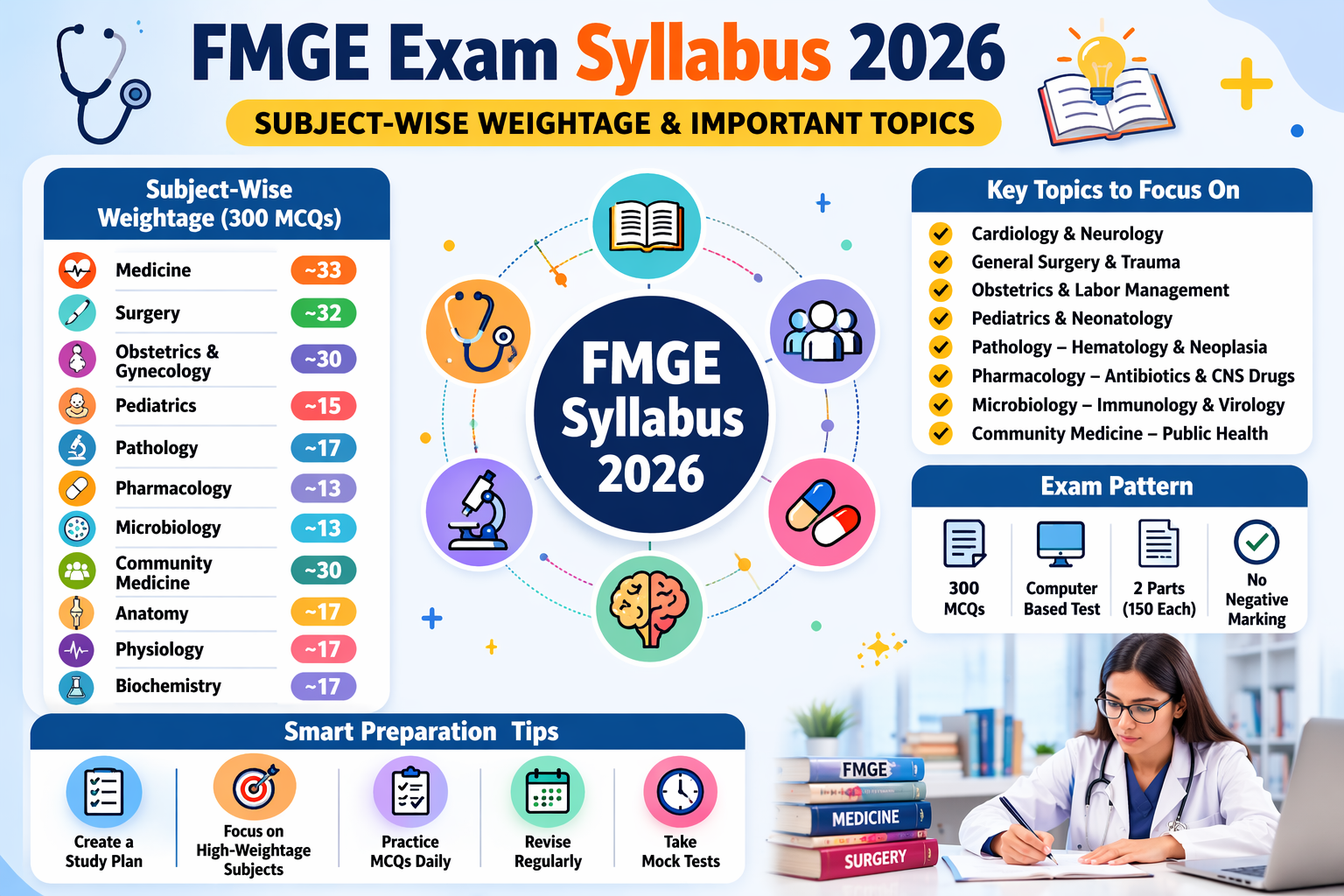
FMGE exam syllabus 2026 subject wise weightage and important topics infographic

FMGE Exam Syllabus 2026: Subject-Wise Topics & Weightage

The FMGE exam syllabus plays a vital role in preparing for the screening test required for foreign medical graduates to practice in India. Moreover, understanding subject-wise weightage and important topics can significantly improve your chances of success. The FMGE exam is conducted by the National Board of Examinations in Medical Sciences (NBEMS), which is responsible for regulating postgraduate medical exams in India.

Since the exam covers a wide range of medical subjects, a structured approach becomes essential. Therefore, focusing on high-yield areas while maintaining consistency can make preparation more effective. To understand how questions are distributed, you should also check the FMGE exam pattern.

🟦 FMGE Exam Syllabus 2026 Overview for Medical Graduates

The FMGE syllabus is based on the MBBS curriculum followed by the National Medical Commission (NMC). In other words, it includes all major subjects studied during undergraduate medical education.

However, instead of treating every subject equally, it is more efficient to divide them into three categories:

  • Pre-clinical subjects
  • Para-clinical subjects
  • Clinical subjects

As a result, prioritization becomes easier and more strategic. The structure is similar to the NEET PG 2026 syllabus.

🟦 FMGE Exam Syllabus 2026: Subject-Wise Weightage & Marks Distribution

A clear understanding of subject weightage helps in planning preparation effectively.

🟨 FMGE Clinical Subjects Weightage in 2026 Syllabus

Clinical subjects contribute the highest number of questions. Therefore, focusing on these areas is crucial.

  • Medicine – ~33 questions
  • Surgery – ~32 questions
  • Obstetrics & Gynecology – ~30 questions
  • Pediatrics – ~15 questions

Consequently, mastering these subjects can significantly improve overall performance.

🟨 FMGE Para-Clinical Subjects in Exam Syllabus and Weightage

Para-clinical subjects connect theory with practical application. In addition, they are considered scoring if concepts are clear.

  • Pathology – ~17 questions
  • Pharmacology – ~13 questions
  • Microbiology – ~13 questions
  • Community Medicine – ~30 questions

As a result, regular revision of these subjects can lead to better accuracy.

🟨 FMGE Pre-Clinical Subjects in 2026 Syllabus Overview

Although these subjects carry relatively lower weightage, they remain important.

  • Anatomy – ~17 questions
  • Physiology – ~17 questions
  • Biochemistry – ~17 questions

Therefore, skipping them entirely would reduce your overall score.

🟦 FMGE Exam Syllabus Subject-Wise: Important Topics to Focus On

Focusing on high-yield topics within each subject can simplify preparation and improve retention.

🟨 Important Anatomy Topics in FMGE Exam Syllabus 2026

Key areas include neuroanatomy, embryology, histology, and gross anatomy. Additionally, visual learning techniques such as diagrams can enhance understanding.

🟨 Physiology Important Topics

Important areas include the cardiovascular system, respiratory system, renal physiology, and endocrinology. Moreover, conceptual clarity is more valuable than rote memorization.

🟨 Biochemistry Important Topics

Core topics include metabolism, enzymes, molecular biology, and vitamins. In particular, metabolic pathways are frequently tested.

🟨 Pathology Important Topics

General pathology, hematology, and neoplasia are commonly asked topics. Furthermore, repeated revision helps in long-term retention.

🟨 Pharmacology Important Topics

Important areas include antibiotics, CNS drugs, and autonomic drugs. In addition, understanding drug mechanisms improves MCQ performance.

🟨 Microbiology Important Topics

Topics such as immunology, bacteriology, and virology are frequently tested. Therefore, consistent revision is essential.

🟨 Medicine Important Topics

Key areas include cardiology, neurology, and infectious diseases. As expected, this subject carries significant weightage.

🟨 Surgery Important Topics

Important areas include general surgery, trauma, and gastrointestinal surgery. Moreover, clinical application is often emphasized.

🟨 Obstetrics & Gynecology Topics

Focus areas include pregnancy complications, labor management, and gynecological disorders. In addition, case-based questions are common.

🟨 Pediatrics Important Topics

Growth and development, neonatology, and vaccination are essential topics. Therefore, understanding fundamentals is important.

🟦 FMGE Exam Pattern and Syllabus 2026 Explained

In addition to the syllabus, understanding the exam pattern is equally important.

  • 300 multiple-choice questions
  • Divided into two parts
  • Computer-based test
  • No negative marking

Consequently, attempting all questions increases your chances of scoring higher.

🟦 How to Cover FMGE Exam Syllabus 2026 Effectively for High Scores

Covering the entire syllabus may seem challenging at first. However, a structured approach can make it manageable.

🟨 Focus on High-Yield Subjects

Begin with clinical subjects such as Medicine and Surgery. Meanwhile, continue revising para-clinical subjects regularly.

🟨 Follow a Study Plan

A structured plan helps maintain consistency. For example, dividing preparation into daily targets and weekly revisions ensures steady progress.

🟨 Practice MCQs Regularly

Regular MCQ practice improves both speed and accuracy. In fact, it also helps identify weak areas quickly.

🟨 Revise Frequently

Frequent revision strengthens memory retention. Therefore, revisiting topics multiple times is essential.

🟦 Common Mistakes in FMGE Exam Syllabus Preparation to Avoid

Several common mistakes can reduce performance. For instance:

❌ Ignoring revision
❌ Avoiding MCQ practice
❌ Using too many resources
❌ Poor time management

As a result, even well-prepared students may struggle.

🟦 FMGE Exam Syllabus FAQs: Important Questions Answered

❓ Is FMGE syllabus the same as MBBS?

Yes, it is based on the MBBS curriculum.

❓ Which subjects are most important?

Clinical subjects carry the highest weightage.

❓ Is FMGE difficult to pass?

Although challenging, it is manageable with proper preparation.

🟒 Conclusion

In conclusion, the FMGE exam syllabus is extensive but manageable with the right strategy. Moreover, focusing on high-weightage topics and maintaining consistency can significantly improve results.

Ultimately, success depends on disciplined preparation, smart planning, and regular revision.

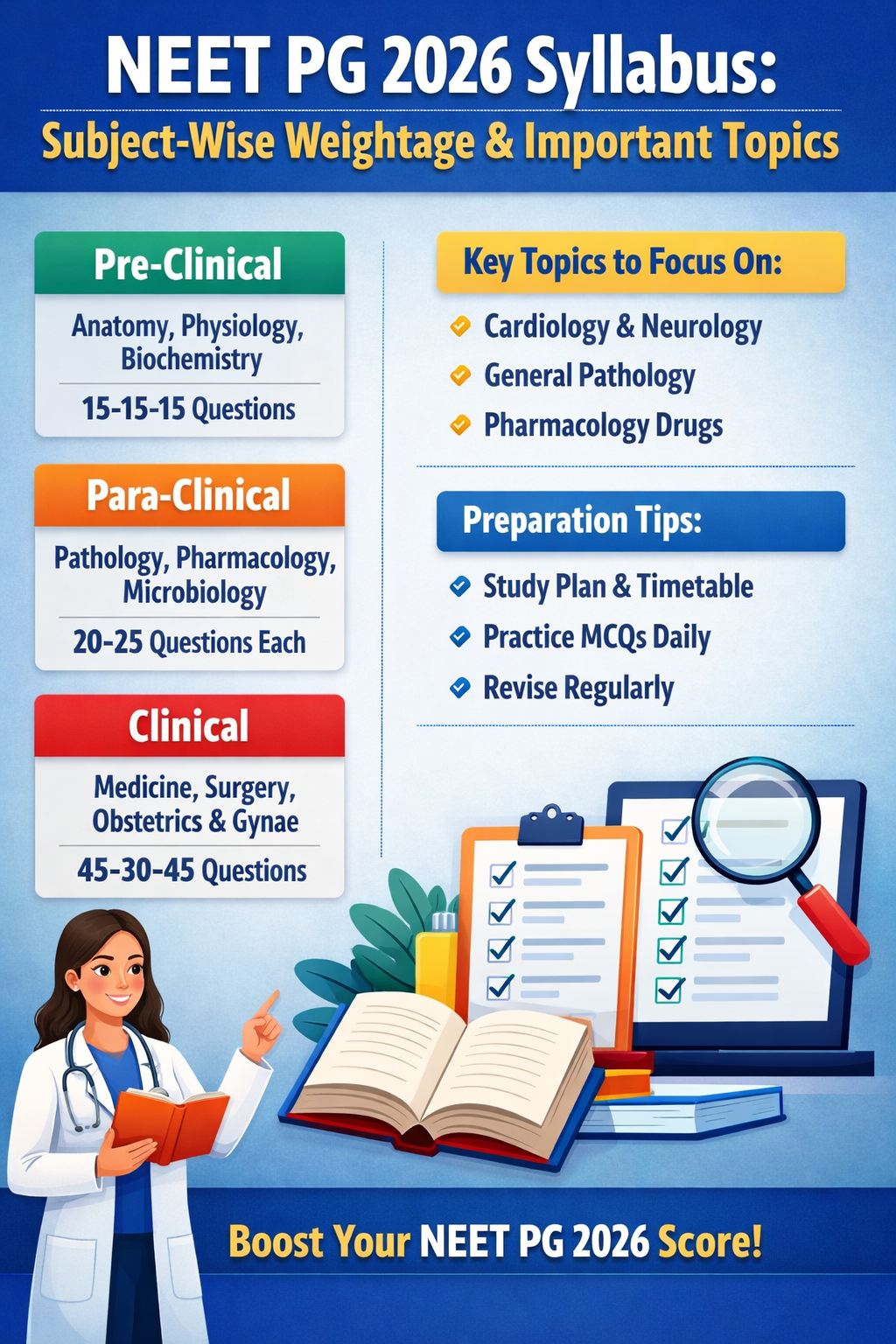
NEET PG 2026 syllabus subject wise weightage and important topics infographic

NEET PG 2026 Syllabus: Subject-Wise Weightage & Important Topics

The NEET PG 2026 syllabus plays a crucial role in preparing for the postgraduate medical entrance exam in India. Moreover, having a clear understanding of subject-wise weightage and important topics can significantly boost your performance.

If you are new to the exam, you can first read our complete guide on the NEET PG exam to understand the structure and preparation strategy. Therefore, combining strategy with syllabus knowledge leads to better results. For official updates, candidates can refer to the National Board of Examinations in Medical Sciences (NBE).

🟦 NEET PG 2026 Syllabus Overview for Postgraduate Medical Entrance Exam

The syllabus for NEET PG is based on the MBBS curriculum. In other words, it includes all subjects studied during undergraduate medical education. The syllabus follows the MBBS curriculum as regulated by the National Medical Commission (NMC).

However, instead of treating all subjects equally, it is more effective to categorize them into:

  • Pre-clinical subjects
  • Para-clinical subjects
  • Clinical subjects

As a result, students can prioritize high-yield areas while still covering the full syllabus.

🟦 NEET PG 2026 Syllabus: Subject-Wise Weightage & Marks Distribution

Understanding subject weightage is essential because it helps you focus your efforts where it matters most.

🟨 NEET PG Clinical Subjects Weightage in 2026 Syllabus

Clinical subjects carry the maximum number of questions. Therefore, they should be your primary focus.

  • Medicine – ~45 questions
  • Surgery – ~45 questions
  • Obstetrics & Gynecology – ~30 questions
  • Pediatrics – ~10–15 questions

Consequently, mastering these subjects can significantly improve your rank.

🟨 NEET PG Para-Clinical Subjects Weightage and Syllabus Topics

These subjects act as a bridge between theory and clinical application. In addition, they are considered highly scoring when concepts are clear.

  • Pathology – ~25 questions
  • Pharmacology – ~20 questions
  • Microbiology – ~20 questions
  • Community Medicine – ~25 questions

As a result, regular revision of these subjects can yield strong results.

🟨 Pre-Clinical Subjects (Lower Weightage)

Although these subjects carry relatively lower weightage, they still contribute to the final score.

  • Anatomy – ~15 questions
  • Physiology – ~15 questions
  • Biochemistry – ~15 questions

Therefore, ignoring them completely would be a mistake.

🟦 NEET PG 2026 Syllabus Subject-Wise: Important Topics to Focus On

To simplify preparation, focusing on high-yield topics within each subject is essential. Moreover, using structured resources can make syllabus coverage easier. You can explore our NEET PG study materials for a more guided preparation.

🟨 Anatomy Important Topics for NEET PG

Key areas include neuroanatomy, gross anatomy, embryology, and histology. Additionally, visual learning through diagrams can improve retention.

🟨 Physiology Important Topics

Important topics include the cardiovascular system, respiratory system, renal physiology, and endocrinology. Moreover, conceptual clarity is more valuable than memorization.

🟨 Biochemistry Important Topics

Focus areas include metabolism, enzymes, molecular biology, and vitamins. In particular, metabolic pathways are frequently tested.

🟨 Pathology Important Topics

General pathology, hematology, neoplasia, and systemic pathology are critical areas. Furthermore, this subject is highly scoring when revised multiple times.

🟨 Pharmacology Important Topics

General pharmacology, antibiotics, CNS drugs, and autonomic drugs are important. In addition, understanding drug mechanisms is essential for solving MCQs.

🟨 Microbiology Important Topics

Bacteriology, virology, immunology, and parasitology are frequently asked topics. Therefore, regular revision is necessary.

🟨 Medicine Important Topics (High Priority)

Cardiology, neurology, endocrinology, gastroenterology, and infectious diseases are crucial. As expected, this subject carries high weightage.

🟨 Surgery Important Topics

General surgery, trauma, gastrointestinal surgery, and orthopedics basics are important areas. Moreover, clinical application is key here.

🟨 Obstetrics & Gynecology Topics

Important topics include pregnancy complications, labor management, and gynecological disorders. In addition, case-based questions are common.

🟨 Pediatrics Important Topics

Growth and development, neonatology, and vaccination are essential topics. Therefore, understanding basics is important.

🟦 How to Cover NEET PG 2026 Syllabus Effectively for High Scores

Covering the entire syllabus may seem overwhelming at first. However, a structured approach can make it manageable.

🟨 Focus on High-Weightage Subjects First

Start with clinical subjects such as Medicine and Surgery. Meanwhile, keep revising para-clinical subjects alongside.

🟨 Follow a Structured Study Plan

Divide your preparation into daily targets, weekly revisions, and monthly mock tests. As a result, consistency becomes easier to maintain.

🟨 Practice MCQs Regularly

MCQ practice improves both speed and accuracy. In fact, it also helps identify weak areas quickly.

🟨 Revise Frequently

Frequent revision strengthens memory retention. Therefore, revisiting topics multiple times is essential.

🟦 Common Mistakes in NEET PG 2026 Syllabus Preparation to Avoid

Many students make mistakes that reduce their performance. For example:

❌ Ignoring low-weightage subjects
❌ Avoiding revision
❌ Focusing only on theory
❌ Skipping MCQ practice

As a result, even well-prepared students may lose marks.

🟦 NEET PG 2026 Syllabus-Based Preparation Strategy for Better Rank

An effective strategy involves multiple stages. Initially, focus on building strong concepts. After that, revise important topics regularly. Finally, concentrate on solving MCQs and mock tests.

Consequently, this layered approach improves both accuracy and confidence.

🟦 NEET PG 2026 Syllabus FAQs: Important Questions Answered.

❓ Is NEET PG syllabus the same as MBBS syllabus?

Yes, it is entirely based on the MBBS curriculum.

❓ Which subjects are most important?

Clinical subjects such as Medicine and Surgery carry the highest weightage.

❓ Can low-weightage subjects be skipped?

No, because every subject contributes to your final score.

❓ How many revisions are needed?

At least three to four revisions are recommended.

❓ Is syllabus coverage enough to crack the exam?

No, consistent MCQ practice and mock tests are also required.

🟒 Conclusion

In conclusion, the NEET PG 2026 syllabus is extensive but manageable with the right approach. Moreover, focusing on high-weightage topics and revising regularly can significantly improve performance.

Ultimately, success depends on consistency, smart planning, and disciplined execution.

NEET PG exam 2026 preparation illustration for medical students

NEET PG Exam 2026: Complete Guide to Eligibility, Syllabus, Exam Pattern & Preparation

NEET PG Exam 2026: Complete Guide for Medical Aspirants

The NEET PG Exam 2026 is a national-level postgraduate medical entrance examination in India conducted for admission into MD, MS, and diploma courses. Moreover, it is the main pathway for MBBS graduates who want to specialize in medicine.

For official updates, candidates can refer to the National Board of Examinations in Medical Sciences (NBE).

Therefore, understanding its structure, eligibility criteria, syllabus, and preparation strategy is very important. In addition, because competition is very high, proper planning becomes essential for success. If you are preparing seriously, you can also check our NEET PG preparation course / study materials to boost your preparation.

🟦 NEET PG Exam 2026 Overview (Postgraduate Medical Entrance Test)

The postgraduate medical entrance exam is conducted to select candidates for advanced medical education in India. In other words, it ensures a standardized admission process for MD and MS programs. For official regulations, you can refer to the National Medical Commission (NMC), which governs medical education in India.

For example, students who qualify can pursue:

  • MD (Doctor of Medicine)
  • MS (Master of Surgery)
  • PG Diploma courses

As a result, it plays a major role in shaping medical careers.

🟦 NEET PG Eligibility Criteria 2026 for Medical Graduates

To appear for the exam, candidates must meet specific requirements. Otherwise, they will not be eligible.

πŸŽ“ MBBS Qualification Requirement

Firstly, candidates must have an MBBS degree from a recognized institution.

πŸ₯ Internship Requirement for NEET PG Exam 2026

In addition, a 1-year compulsory internship must be completed before the cutoff date.

🩺 Medical Registration Requirement for PG Medical Admission

Moreover, candidates must be registered with a medical council (state or national).

Therefore, all eligibility conditions are mandatory. More official eligibility details are available on the National Medical Commission website.

🟦 NEET PG Syllabus 2026 (Subject-Wise Medical Subjects)

The syllabus is based on MBBS subjects. However, it is divided into three major categories.

🟨 Basic Medical Sciences in NEET PG Exam

These include:

  • Anatomy
  • Physiology
  • Biochemistry

Although basic, they are essential for understanding clinical subjects.

🟨 Para-Clinical Subjects for NEET PG Preparation

These subjects include:

  • Pathology
  • Pharmacology
  • Microbiology
  • Forensic Medicine
  • Community Medicine

As a result, they help build strong medical foundations.

🟨 Clinical Subjects in NEET PG 2026 Syllabus (High Weightage Areas)

Most importantly, clinical subjects carry the highest importance:

  • Medicine
  • Surgery
  • Pediatrics
  • Obstetrics & Gynecology
  • Orthopedics
  • Dermatology
  • Psychiatry
  • ENT
  • Ophthalmology
  • Radiology

Therefore, focusing on these subjects significantly improves scoring chances.

🟦 NEET PG Exam Pattern 2026 and Marking Scheme

Understanding the exam structure is crucial for effective preparation.

🟨 Computer-Based Test Format for NEET PG Exam

The exam is conducted in CBT mode.

🟨 Question Pattern and Total Marks in NEET PG Exam

  • 200 MCQs
  • 800 marks
  • 3 hours 30 minutes duration

🟨 Marking Scheme for NEET PG Exam 2026

  • +4 for correct answers
  • -1 for incorrect answers

Consequently, accuracy is more important than attempting all questions.

🟦 How to Prepare for NEET PG Exam 2026 Effectively

A proper strategy is essential for success. Therefore, students should follow a structured plan.

🟨 NEET PG Syllabus Planning Strategy

Firstly, analyze the syllabus carefully and identify high-weightage topics.

🟨 Study Plan for NEET PG Preparation 2026

In addition, divide your time into:

  • Study sessions
  • Revision blocks
  • MCQ practice

As a result, consistency improves over time.

🟨 Importance of MCQ Practice in NEET PG Exam

Moreover, daily MCQ practice improves speed and accuracy significantly.

🟨 Role of Mock Tests in NEET PG Preparation Strategy

Meanwhile, mock tests simulate real exam conditions. Consequently, they improve confidence and time management.

🟨 Revision Strategy for NEET PG Exam 2026 Success

Most importantly, revision must be repeated multiple times to retain concepts effectively.

🟦 Common Mistakes in NEET PG Preparation to Avoid

Many students lose marks due to avoidable mistakes:

❌ No revision strategy
❌ Poor MCQ practice
❌ Too many resources
❌ Weak time management
❌ Skipping mock tests

As a result, performance drops even after hard work.

🟦 Is NEET PG Exam 2026 Difficult for Medical Students?

Yes, the exam is highly competitive. However, it is not impossible to crack.

On one hand, the syllabus is large. On the other hand, structured preparation makes it manageable.

Moreover, consistent revision and practice significantly improve results.

🟦 Career Opportunities After NEET PG Exam 2026

After qualifying, students can pursue:

  • MD specialization
  • MS specialization
  • PG Diploma courses

In addition, career opportunities include:

  • Specialist doctor in hospitals
  • Teaching profession
  • Private practice
  • Government healthcare services
  • Medical research

Therefore, NEET PG opens multiple career paths.

🟦 Frequently Asked Questions (NEET PG Exam 2026)

🟨 What is NEET PG exam used for?

It is used for admission into postgraduate medical courses like MD and MS.

🟨 Is there any attempt limit for NEET PG?

No, there is no attempt limit if eligibility criteria are met.

🟨 Is NEET PG harder than NEET UG?

Yes, because it includes advanced medical concepts and higher competition.

🟨 What is the best preparation strategy for NEET PG?

Consistent revision, MCQ practice, and mock tests.

🟨 Which subjects are most important in NEET PG?

Clinical subjects like Medicine, Surgery, and Gynecology carry the highest weightage.

🟒 Conclusion

In conclusion, the NEET PG Exam 2026 is a crucial milestone for every medical graduate. Moreover, it provides opportunities for specialization and career growth.

However, success depends on smart planning rather than hard work alone. Therefore, students should focus on consistency, revision, and regular practice.

For students who want a guided approach, you can contact usΒ for structured learning.